Best Matcha in Switzerland: Why It's So Hard to Find (2026)
The Problem with Matcha in Europe
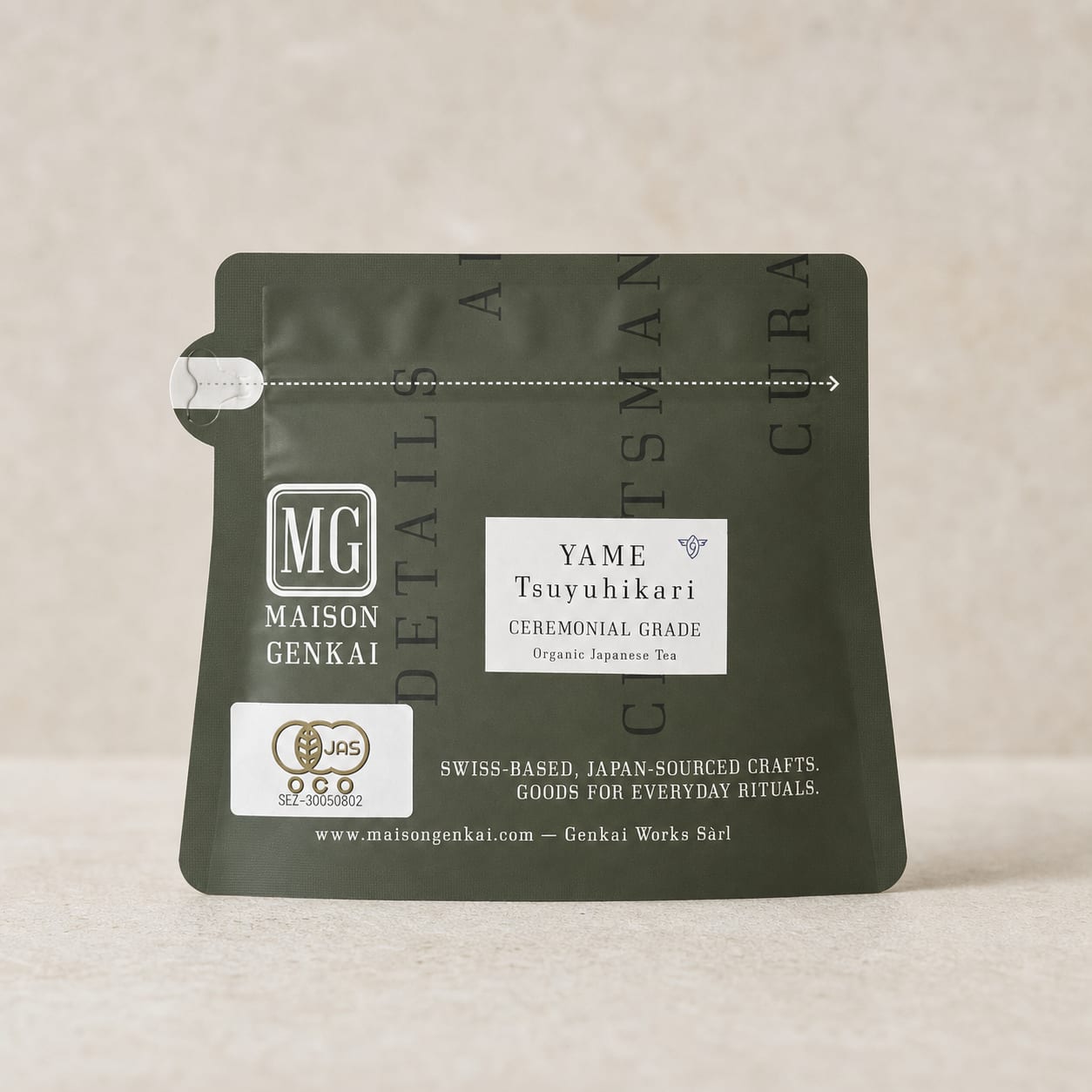
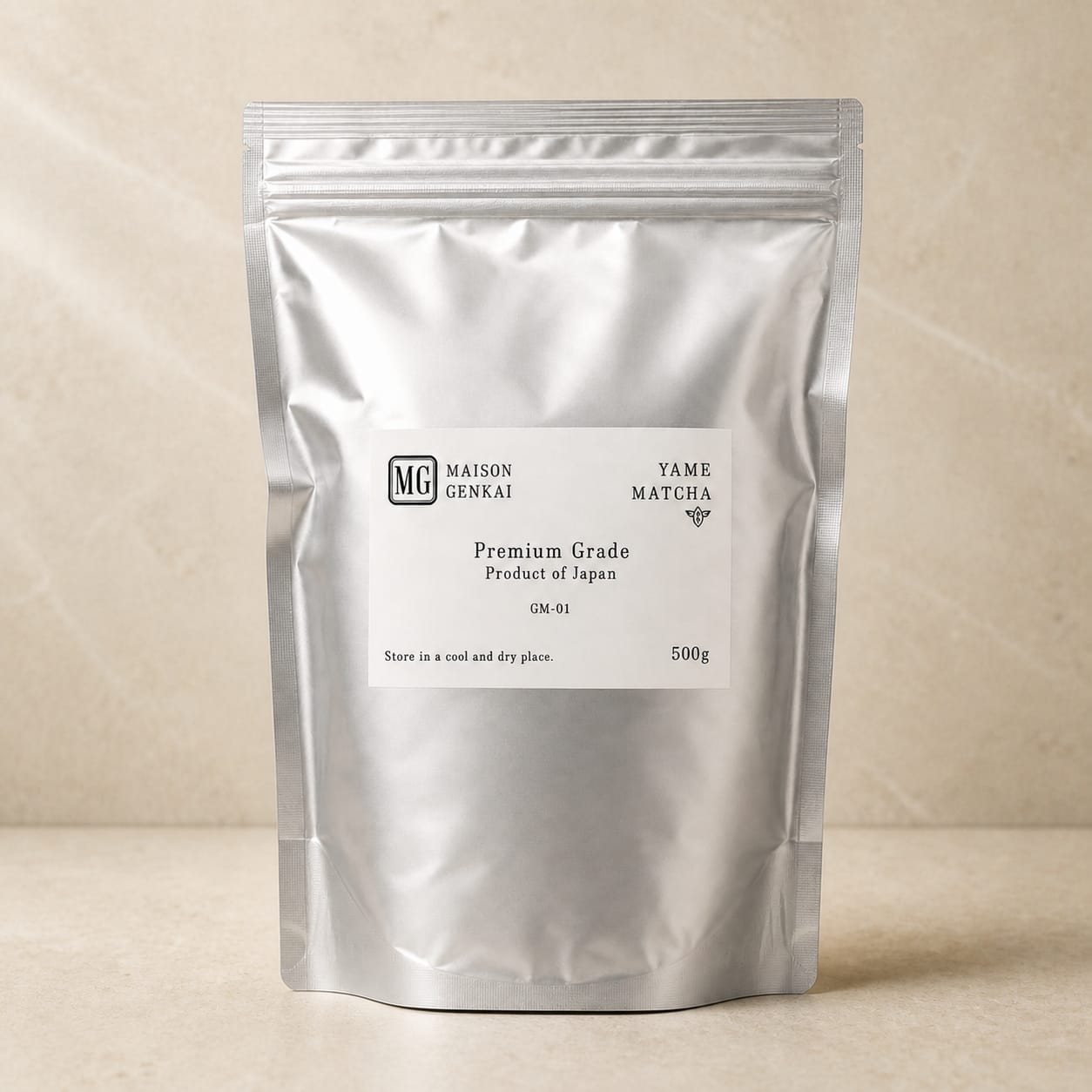
Maison Genkai sources its premium matcha and hojicha exclusively from Yame, Fukuoka. Current formats, prices and availability are listed in the shop.
"ceremonial grade" has no legal definition in Europe. There is no regulation, no certification body, no standard. Any brand can print the words on their label, and many do, regardless of what is actually inside the tin.
This is not a niche problem. The global matcha market was valued at approximately $4.04 billion in 2025 and is projected to reach $8.79 billion by 2033, growing at a CAGR of roughly 10% (SNS Insider / GlobeNewswire, January 2026). Europe is one of the key growth regions driving that expansion, which means more brands, more marketing spend, and unfortunately, more confusion for consumers trying to find genuinely high-quality Japanese matcha in Switzerland.
Why Most Matcha in Swiss Supermarkets Is Not Japanese
This surprises many people: a significant share of matcha sold in Swiss supermarkets and mass-market health stores originates from China, not Japan. The reasons are purely economic. Chinese ceremonial-style green tea powder can be produced at a fraction of the cost of authentic Japanese tencha (the shade-grown leaf that becomes matcha). It is often processed using similar grinding techniques and packaged with Japanese-sounding branding, and without transparent labelling, consumers have no easy way to distinguish one from the other.
Maison Genkai sources its premium matcha and hojicha exclusively from Yame, Fukuoka. Current formats, prices and availability are listed in the shop.
That is not to say all Chinese green tea powder is poor quality – but it is a fundamentally different product, grown under different conditions, with a different flavour profile. Passing it off as equivalent to Japanese ceremonial matcha is where the problem lies.
Swiss Import Regulations for Matcha
Switzerland's food safety framework, governed by the Lebensmittelgesetz (LMG) and aligned with EU food law via the bilateral agreements, imposes specific requirements on imported tea and tea-derived products. For matcha entering the Swiss market, the key regulatory considerations include:
- Maximum residue levels (MRLs) for pesticides, Switzerland adopts EU MRL standards for imported foodstuffs. Japanese matcha, particularly from certified organic farms, typically complies well; lower-grade products with unknown provenance present a higher risk of non-compliance
- Labelling requirements: country of origin must be clearly stated on packaging sold in Switzerland. This is frequently circumvented by brands that list a European distributor as the "origin" without clarifying where the tea itself was grown
- JAS Organic certification, Japan's Japanese Agricultural Standard (JAS) organic certification is the benchmark for organic matcha sourced in Japan. Unlike some certification bodies, JAS requires full traceability from farm to export, and prohibits synthetic pesticides and fertilisers. In Switzerland, JAS-certified products can be imported and sold as organic provided they meet equivalent Swiss Bio Suisse or EU Regulation (EC) No 834/2007 standards. When a supplier cannot provide JAS documentation, the organic claim should be treated with caution
- Customs tariffs: Japan-Switzerland trade benefits from a bilateral Economic Partnership Agreement (EPA), which has progressively reduced tariffs on agricultural products including green tea. This has made direct Japanese imports more economically viable for specialised importers
For the consumer, the practical takeaway is simple: ask whether the brand can provide a certificate of analysis and confirm the country of origin of the tea leaves, not just the packaging or distribution point.
What "Ceremonial" Actually Means in Japan
In Japan, matcha grading is not a marketing exercise – it is rooted in centuries of tea ceremony tradition. True ceremonial matcha (薄茶 usucha grade) meets very specific criteria:
- First harvest only (ichiban-cha, 一番茶), the first spring flush, typically late April to May, when leaves are richest in L-theanine and chlorophyll
- Minimum 21 days of shading under traditional tana or kabuse covers, which forces the plant to produce more amino acids
- Finely ground on granite mills at approximately 40 grams per hour: slow enough to prevent heat damage to the chlorophyll and amino acids
- Vibrant emerald color, never yellowish or dull
- Pronounced umami and natural sweetness: drinkable with just water, no sweetener needed
These are not arbitrary marketing criteria. They are the standards used by Japanese tea masters when selecting matcha for chanoyu (tea ceremony). A matcha that does not meet these criteria would simply never be served in a ceremonial context in Japan.
The supply chain from Yame, Fukuoka to Switzerland is worth understanding. After harvest, tencha leaves are dried, de-stemmed, and stored in temperature-controlled facilities before milling. Freshly milled matcha begins to oxidise within weeks when exposed to air, light, or heat, which is why direct-from-farm sourcing with short logistics chains matters significantly. A product that spent six months in a European warehouse before reaching a Swiss shelf is oxidised before you open the tin, regardless of what the label says about harvest date.
The European Grading Problem
Many brands selling in Switzerland and Europe use the term "ceremonial" for matcha that would not qualify in Japan: second-harvest leaves, minimal shading, machine-ground powder with a yellowish tint. Some matcha labelled "ceremonial" is not even Japanese in origin.
Maison Genkai sources its premium matcha and hojicha exclusively from Yame, Fukuoka. Current formats, prices and availability are listed in the shop.
The Swiss tea market is trending clearly toward natural and organic products, with matcha increasingly consumed beyond the traditional bowl: in lattes, smoothies, baked goods, and culinary applications (globalteaauction.com). As usage expands, so does the commercial incentive to stretch the "ceremonial" label to cover products that do not deserve it.
How We Evaluated
We looked at what matters most when choosing matcha in Switzerland:
- Grading Transparency: Does the brand explain what makes their matcha "ceremonial"? Do they disclose harvest, shading, and processing details?
- Sourcing: Direct from Japan, or through European importers? Single-origin or blended?
- Taste Quality: Color, aroma, umami, bitterness, texture when prepared as usucha
- Price per Gram: Value for the quality delivered
- Swiss Availability: CHF pricing, Swiss shipping, local customer service
- Certifications: JAS organic, country-of-origin documentation, pesticide testing
What We Found
The Transparency Gap
Most brands use vague terms like "premium quality" or "finest selection" without defining their criteria. Very few disclose shading duration, harvest timing, or processing methods. This makes it nearly impossible for consumers to compare products objectively. When we asked several Swiss-market brands to confirm their harvest origin and shading period, fewer than half could provide a clear answer.
The Sourcing Question
Several Swiss-market brands source through European importers rather than directly from Japan. This adds cost and often means less control over quality and freshness. Direct-from-farm sourcing ensures fresher matcha and genuine traceability, and it removes one layer of margin that otherwise translates either to higher consumer prices or to corners cut elsewhere in the supply chain.
Price Does Not Always Equal Quality
Maison Genkai sources its premium matcha and hojicha exclusively from Yame, Fukuoka. Current formats, prices and availability are listed in the shop.
Our Approach at Maison Genkai
We use the same grading terms, ceremonial, premium: because they are what consumers know. But behind those terms, we apply the actual Japanese standards:
- Ceremonial: First harvest only, 21+ days shading, sourced from Yame (Fukuoka), one of Japan's most prestigious matcha-producing regions
- Premium: First or early second harvest, 14+ days shading
We source directly from farms in Yame, not through European intermediaries. Every batch is traceable to its origin farm and harvest season. When we say "ceremonial," we mean it would actually be served in a Japanese tea ceremony. Our premium matcha from Yame is JAS-certified organic, and we can provide the relevant documentation on request.
We also offer a premium hojicha from Yame: roasted Japanese green tea in finely ground powder form, not loose leaf. hojicha brews at a higher temperature than matcha (90–100°C versus 60–70 °C for matcha) and delivers a distinctly different profile: toasty, low-caffeine, naturally sweet. It is an increasingly popular alternative for those who want the convenience of a powdered Japanese tea without matcha's grassy intensity.
For those exploring the full range of Japanese ceremonial teas available in Switzerland, our guide to what matcha actually is covers the fundamentals in detail.
What to Look For
When choosing matcha in Switzerland, ask these questions:
- Does the brand specify which harvest it is (first, second)?
- Do they mention shading duration?
- Is the matcha stone-ground or machine-ground?
- Can they tell you which region and farm it comes from?
- Is the color a vivid green (good) or dull/yellowish (a sign of lower quality or oxidation)?
- Is there JAS organic certification or equivalent documentation?
- Where does the distributor actually store the product, in Japan, or in a European warehouse?
If a brand cannot answer these questions, their "ceremonial grade" label should be taken with a grain of salt: regardless of the price tag. The matcha market in Switzerland is growing fast, and so is the noise. The best filter remains the same one Japanese tea masters have used for centuries: taste it prepared simply, with nothing but good water, and let the cup speak for itself.
Read next
To go further, see How to Choose Matcha: 2026 Buying Guide, then Buy Matcha Online: 9 Signs of a Reliable Shop. For a complementary angle, also read Yabukita vs Tsuyuhikari: Which Matcha Cultivar to Choose?.
Yame matcha delivered in Switzerland
Ready to choose your matcha?
Compare the active Yame matcha references, current prices and availability before ordering in CHF.
See matcha in stock