Matcha FAQ: Everything You Need to Know (2026)
The word matcha is everywhere, but the real questions always come back to the same place: what exactly is it, how do you prepare it properly, which grade should you choose, why are some products excellent while others taste bitter, and how do you buy the right matcha in Switzerland without making a mistake. This FAQ was designed to answer those matcha questions in a simple, useful, and concrete way.
At Maison Genkai, we believe a good article should not just attract traffic. It should help the person reading it make a better choice. If you are new to matcha, start with our guide to matcha grades and our article on how to prepare matcha properly. You will quickly understand why quality changes everything.
What exactly is matcha?
Matcha is a Japanese green tea powder made from finely ground tencha leaves. Unlike a standard infusion, you do not steep the leaf and remove it: you consume the entire leaf in powdered form. This is what gives matcha its texture, its intense green colour, its concentrated flavour, and its very different mouthfeel.
A truly high-quality matcha should be fine, vibrant, vegetal, and smooth on the palate. It should never feel gritty, appear dull, or leave an aggressive bitterness. If you have previously tasted a matcha that was too dark, dusty, or harsh, the problem is not matcha itself: it is the product selection.
What is the difference between ceremonial, premium, and culinary matcha?
The grade indicates the intended use, not just a marketing claim. Ceremonial matcha is designed to be drunk almost pure, with water alone. It should be gentle, clean, rich in umami, and low in astringency. Premium matcha can work on its own but often expresses itself beautifully in a latte. Culinary matcha is made for cooking, baking, or sweeter drinks.
The confusion arises because many shops use the word "ceremonial" for nearly everything. To avoid falling into that trap, read our article Understanding matcha grades: ceremonial vs premium vs culinary. You will see how to connect usage, taste, price, and freshness in a way that actually makes sense.
How much matcha should I use per cup?
For a classic usucha-style matcha, the simplest baseline is 1 to 2 grams of powder — roughly one level teaspoon or two scoops with a chashaku. Then add 60 to 80 ml of water at approximately 60–70 °C and whisk. For a latte, you can increase the dose slightly so the tea flavour remains present despite the milk.
Many people fail their first cup because they use too much water or not enough powder. The result: the matcha tastes bland and watery. Conversely, too much powder with a mediocre grade will produce an aggressive, unpleasant cup. The right proportion therefore also depends on the grade you have chosen.
Does matcha contain caffeine?
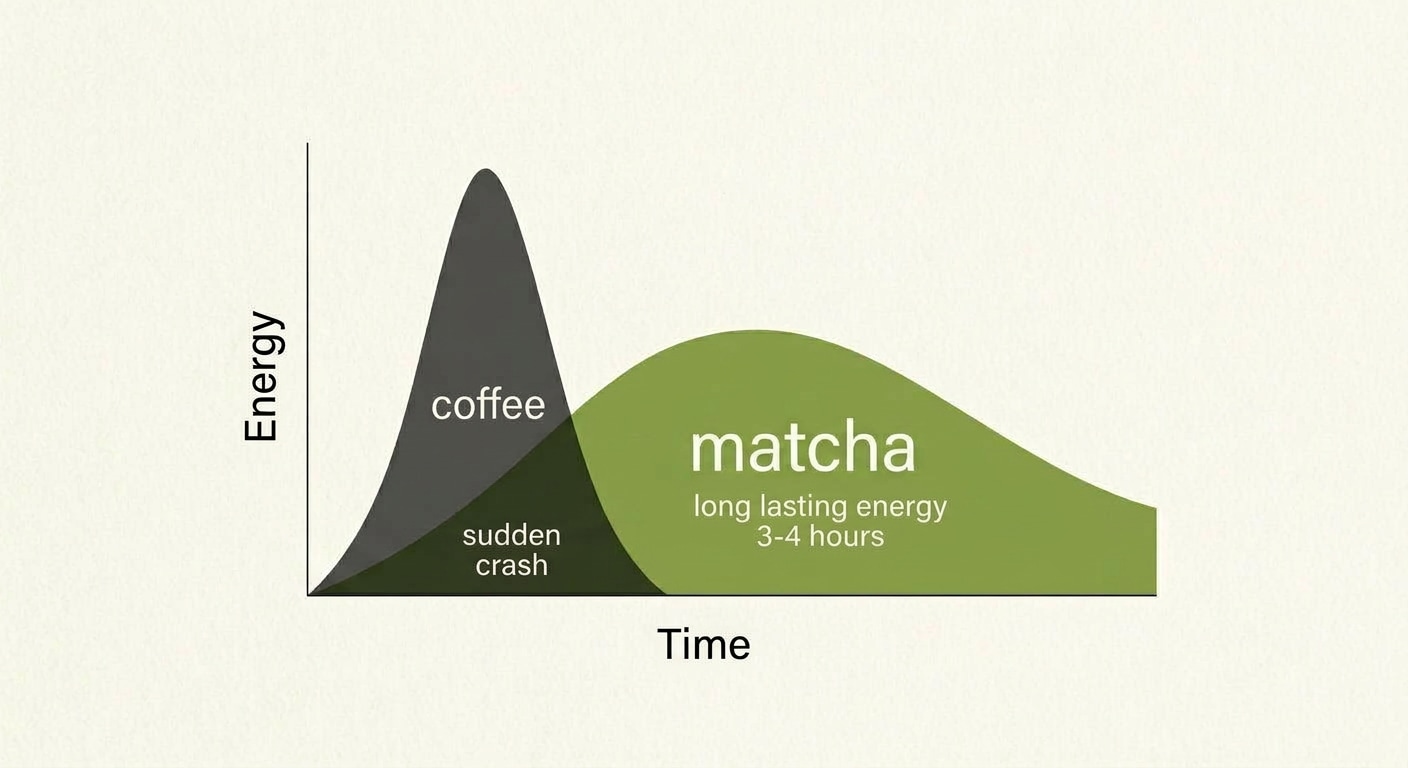
Yes, matcha naturally contains caffeine. Because you consume the entire leaf, the effect can feel stronger than with a standard brewed green tea. But the experience is not the same as coffee. Many people describe matcha as providing more stable, more gradual, and cleaner energy — without the jitters or the crash.
If you are looking for a gentler drink later in the day, check out our article Hojicha vs Matcha: taste, caffeine, and health benefits. Hojicha is often a better choice when you want a warm, roasted cup that is far less stimulating.
Why does good matcha cost more?
Because good matcha depends on several demanding variables: cultivation, shading, harvesting, sorting, stone-grinding, storage, and logistics. A serious matcha is not simply "green." It comes from precise work on the leaf, its texture, and its flavour profile. The more the product is intended to be drunk pure, the higher the standards become.
Price does not guarantee everything, but a price that seems too low often signals limited quality, a mispositioned grade, or questionable freshness. If you want to understand how to read a price without falling for marketing, our guide Where to buy matcha in Switzerland gives you concrete benchmarks.
How do I recognise bad matcha?
Three warning signs come up repeatedly: a khaki or brownish colour, a weak or dusty smell, and a mouth that dries out very quickly. Bad matcha can also produce plenty of froth when whisked while remaining flat in flavour. Froth alone is not proof of quality.
In contrast, good matcha has a fine, light powder, a vivid colour, a fresh vegetal aroma, and a silkier mouthfeel. It can be gentle, round, slightly creamy, sometimes with a marine note or a small final bitterness that stays balanced — but never brutal or harsh.
How should I store matcha?
Matcha is sensitive to air, light, moisture, and heat. Once opened, it should be sealed carefully and used fairly regularly. Ideally, store it in its airtight container in a cool, dry place away from heat sources. If you choose the refrigerator, be careful to avoid condensation shocks when taking it in and out.
The simple rule: buy a size that matches your pace of consumption. A small format used quickly is better than a large format left open for months. For daily use, explore our references on the tea page, from premium matcha to more ceremonial grades.
Can I use the same matcha for everything?
Technically yes. Strategically no. If you use a beautiful ceremonial matcha for cookies, you will overpay for a use that does not truly showcase the product. Conversely, if you use a matcha that is too rustic for a pure cup, you risk being disappointed.
The simplest approach is to align the grade with the usage. Pure cup: lean ceremonial. Daily latte: a well-balanced premium. Cooking and baking: culinary or a more structured premium. To get started, the most useful combination is often one matcha for drinking and another for cooking.
What equipment do I actually need?
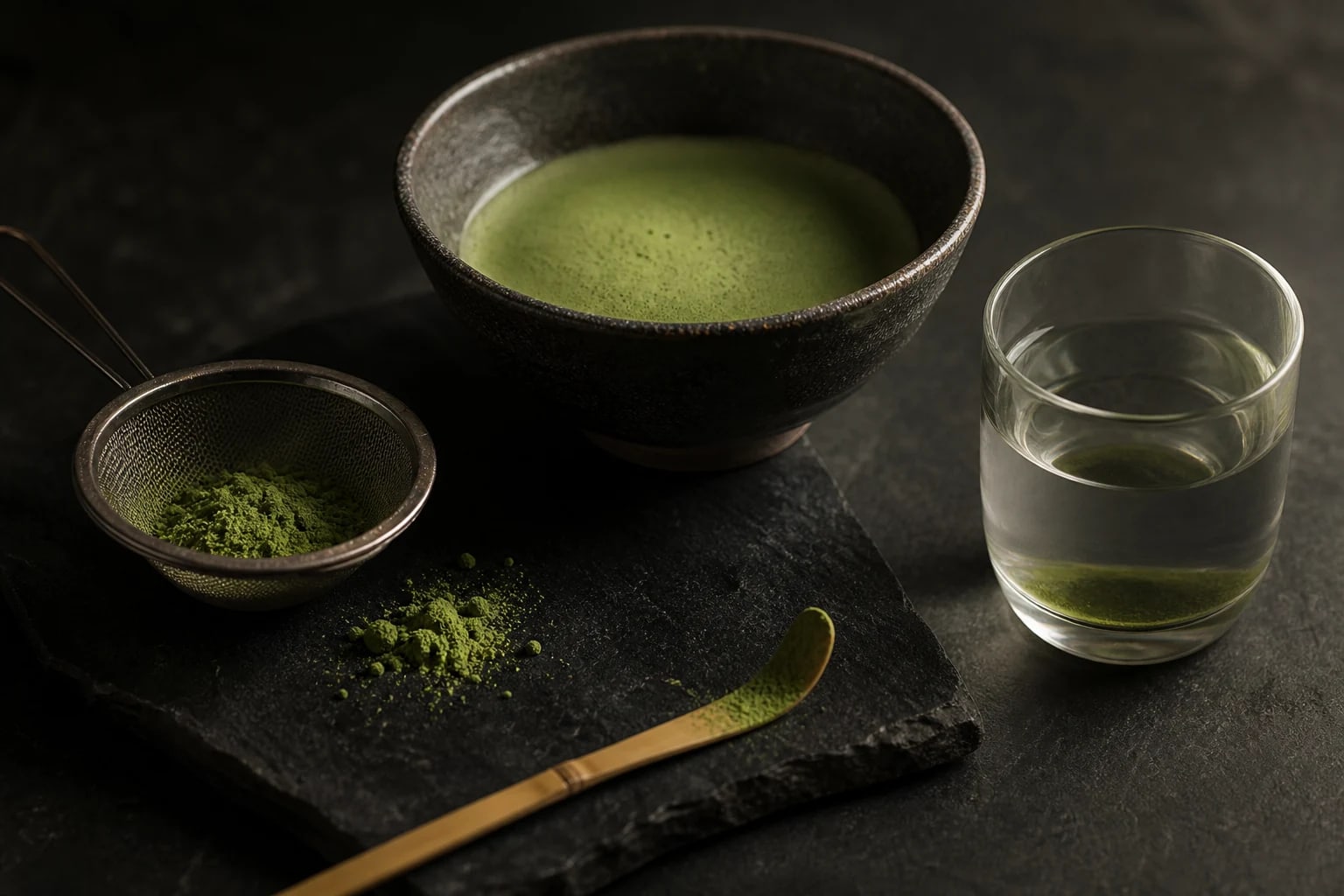
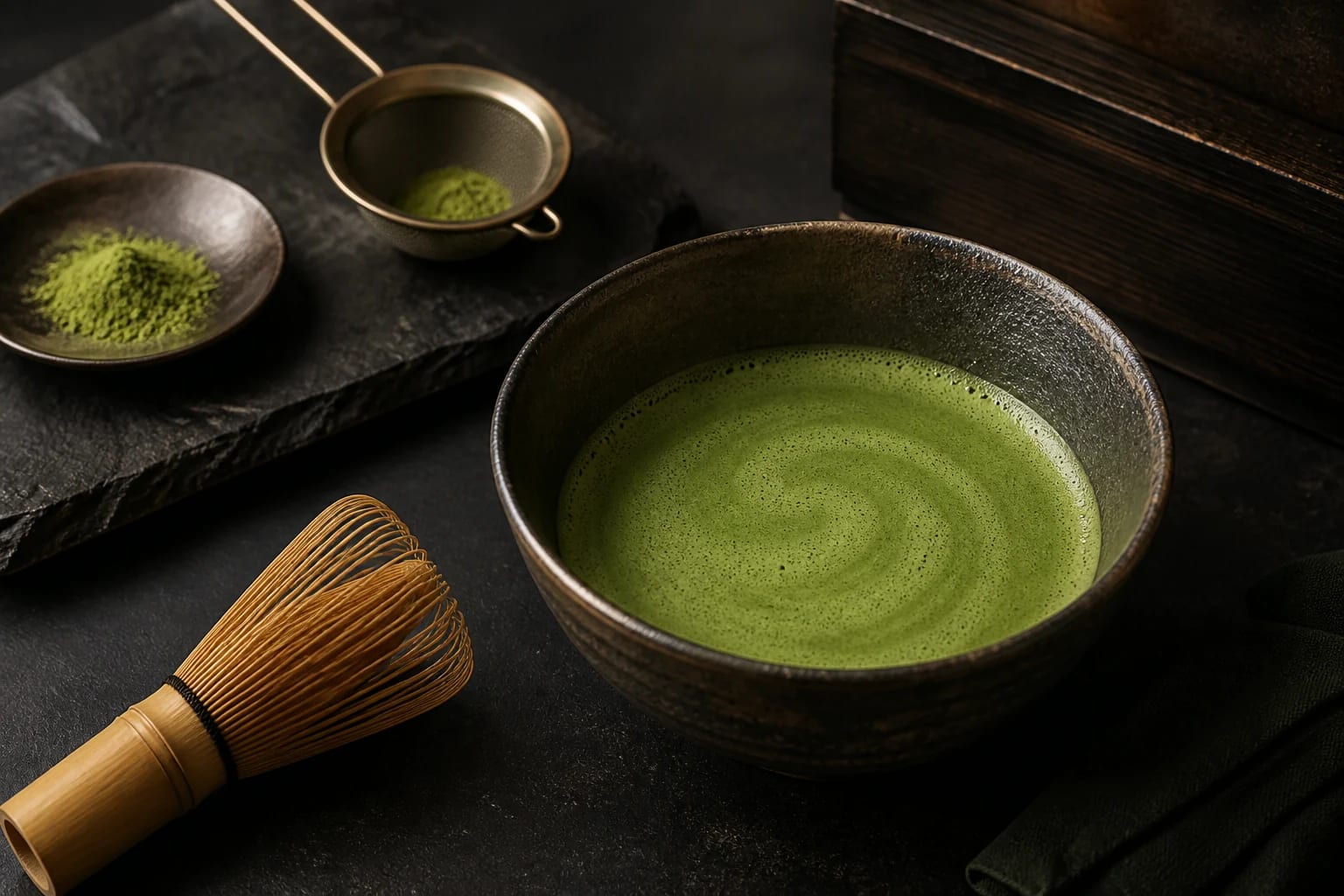
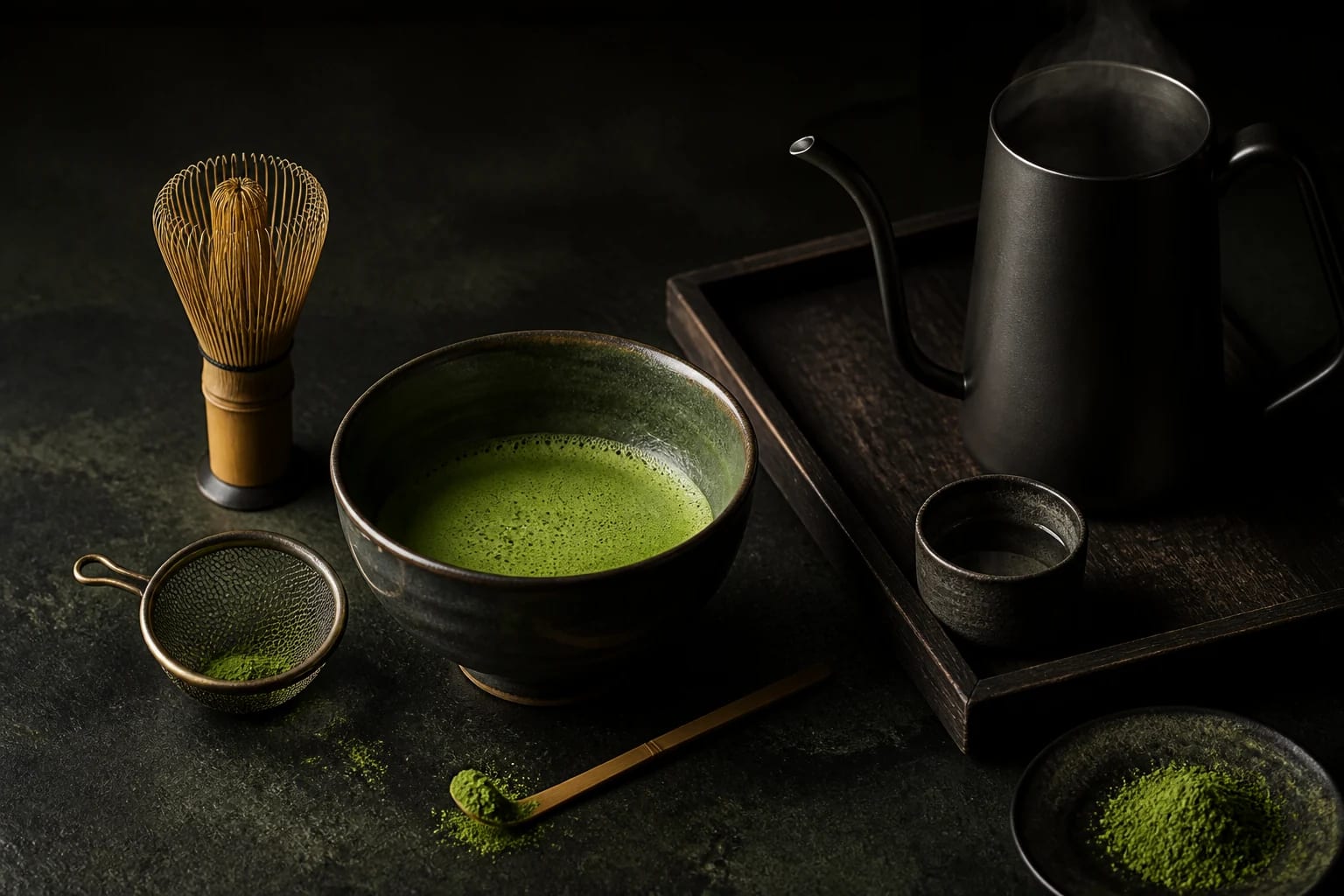
You do not need a full ceremonial set to get started, but certain accessories clearly elevate the experience. A bowl wide enough to whisk in, a small sieve to prevent clumps, and a bamboo whisk or a clean milk frother already make a significant difference. The real issue is not finding the "perfect" tool: it is building consistency in your technique.
If you are just beginning, focus on learning to sift, to dose correctly, and to manage your water temperature. The rest will follow naturally. Our article How to prepare matcha: traditional and modern methods details both traditional and modern approaches so you can find the one that fits your daily routine.
Can matcha only be enjoyed hot?
Not at all. Matcha works beautifully hot, cold, as a latte, iced, or even in cooking and baking. It all depends on the grade and your intention. A gentle, clean profile can produce a very elegant cup with hot water. A denser profile can hold up better in a latte. In summer, a well-executed iced matcha can be one of the most refreshing formats you will find.
If your priority is perfecting the texture of a latte, also read our matcha latte recipe. And if you enjoy roasted notes, discover our hojicha latte recipe for a warm, comforting alternative.
Which matcha should I choose to start?
If you are just starting out, avoid extremes. A very high-end matcha will be difficult to evaluate if your technique is not yet in place. A matcha that is too culinary will make you think you do not like matcha at all. The best entry point is often a clean, versatile premium grade — one that suits a latte but is also refined enough to be tasted nearly pure.
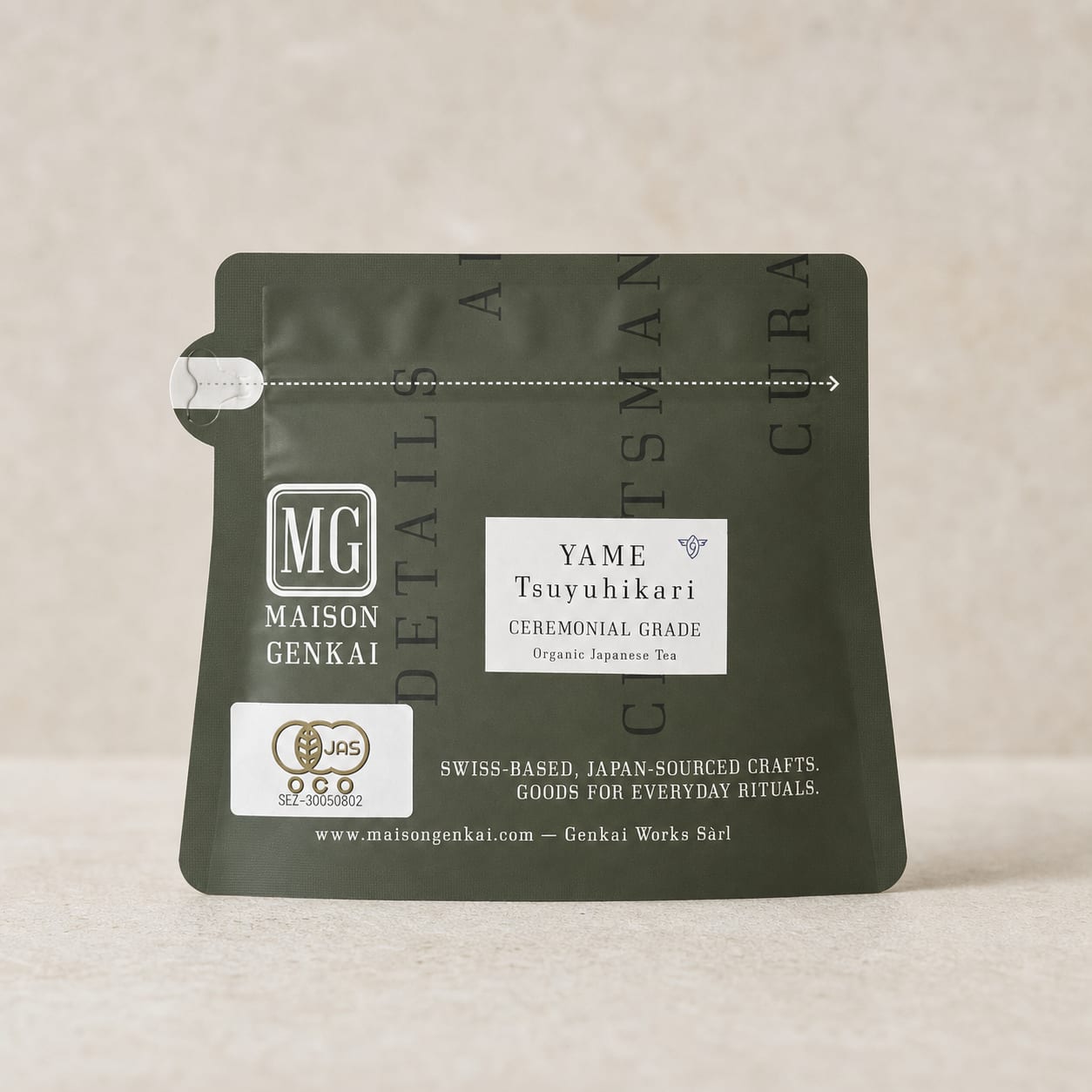
Maison Genkai sources its premium matcha and hojicha exclusively from Yame, Fukuoka. Current formats, prices and availability are listed in the shop.
Should I drink matcha every day?
It depends on your caffeine sensitivity, your routine, and how you prepare it. For many people, one cup a day fits perfectly into the morning or early afternoon. The key is to observe how you actually feel: your focus, digestion, sleep quality, and overall comfort.
Matcha works especially well when it becomes a simple, stable ritual — not when it is treated as a miracle promise. A single well-prepared cup at a coherent moment in your day is worth far more than scattered, poorly dosed servings throughout the week.
In summary: three questions to ask before buying
Before you buy, ask yourself three simple questions: Is this for drinking pure or making a latte? Is this a format size that matches my consumption pace? Does the shop clearly explain the origin, intended use, and flavour profile of the product? If those answers are vague, there is often a problem with the selection or positioning.
Matcha becomes much simpler when you stop searching for the "best matcha in the world" and start looking for the right matcha for the right use. That is exactly what allows you to buy with more confidence and enjoy every cup to the fullest.
Read next
- Understanding matcha grades: ceremonial vs premium vs culinary
- How to prepare matcha: traditional and modern methods
- Where to buy matcha in Switzerland: 2026 guide
Read next
To go further, see How to Prepare Matcha: Traditional and Modern Methods, then Why Is My Matcha Bitter? A Six-Step Diagnosis. For a complementary angle, also read Matcha Does Not Dissolve: Clumps and Sediment Explained.