Matcha Latte Recipe: Café-Quality at Home in 3 Minutes
Making a matcha latte at home sounds straightforward — matcha powder, milk, hot water, done. But in practice, that simplicity is exactly where things go wrong. Too many homemade matcha lattes end up overly milky, bitter, cloyingly sweet, or just flat-out bland. The good news? With a few precise adjustments, you can make a matcha latte recipe that genuinely rivals what you'd get at a specialty café — and it takes under five minutes.
The first key isn't your frothing technique or the brand of oat milk in your fridge. It's the powder itself. A great latte starts with a matcha that's actually suited for the job. If you're unsure what separates one grade from another, start with our guide to matcha grades. It explains why a purely culinary-grade powder produces a dramatically different result than a well-selected premium matcha — and why the most expensive ceremonial grade isn't always the right choice either.
The best matcha for lattes isn't necessarily the priciest
When you're learning how to make a matcha latte, it's tempting to reach for the highest-grade ceremonial matcha you can find. But here's the thing: milk rounds off, dilutes, and reshapes the flavour profile of any tea. The delicate, almost floral nuances of a top-tier ceremonial matcha will largely disappear beneath the dairy. What you actually need is a matcha with enough body and vegetal presence to remain clearly readable through the milk — without tipping into harsh, dry bitterness.
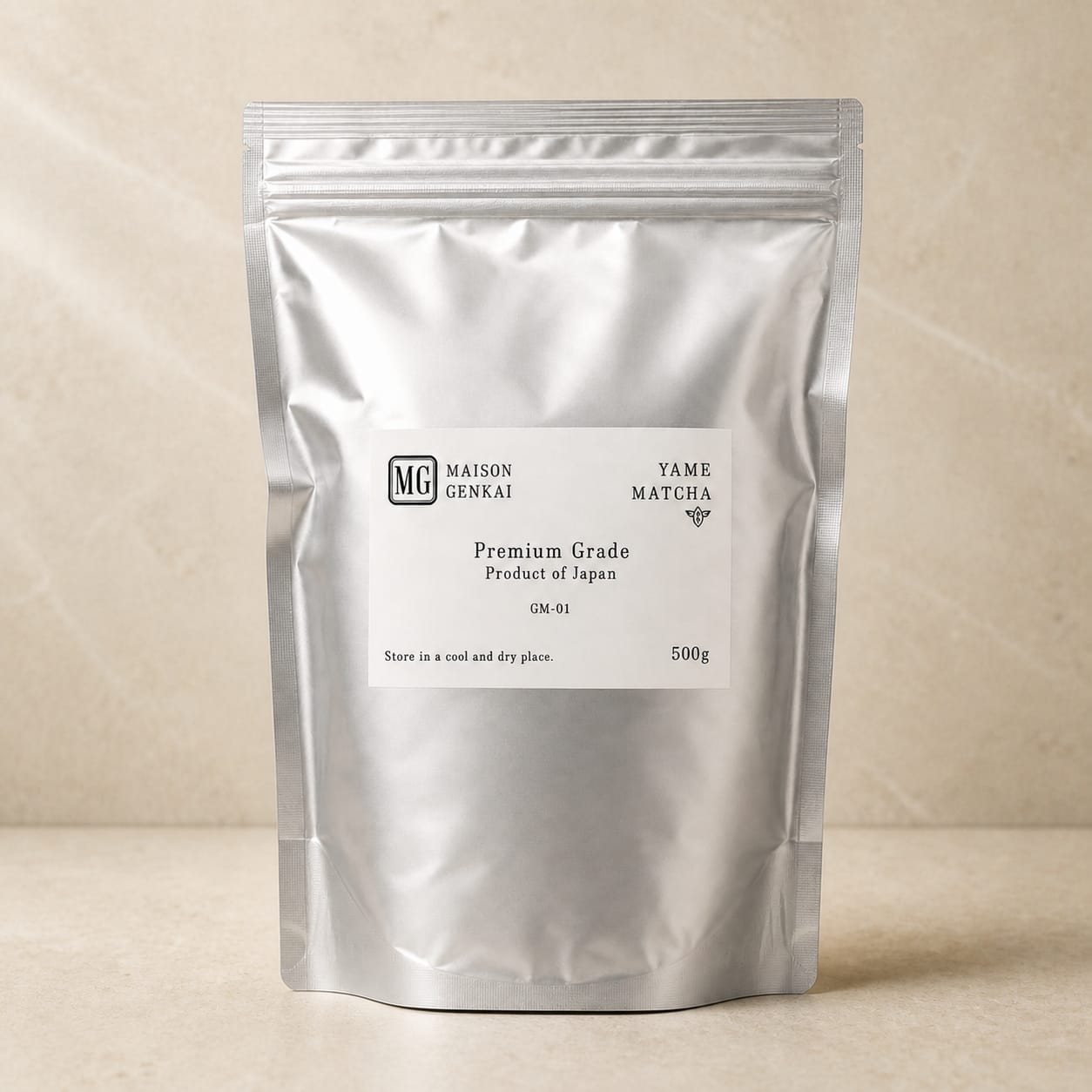
That sweet spot is exactly where a good premium grade lives. It has the vibrancy and depth to stand up in a latte, the clean finish to keep things balanced, and a price point that makes daily use realistic. If you want a more detailed breakdown of which matcha works best for which purpose, our Matcha FAQ tackles the common question of whether one matcha can do it all. For your everyday latte, our premium matcha from Yame is an excellent starting point.
Essential ingredients and ratios
For a well-balanced hot matcha latte, here's what you need:
- Matcha powder: 1.5 to 2 grams (roughly 1 teaspoon)
- Hot water: 40 to 60 ml at 60–70 °C (167–176°F) — not boiling
- Milk of your choice: 150 to 180 ml
You can add a touch of sweetener, but we strongly recommend tasting it without sugar first. A good matcha has a natural, rounded sweetness — especially at premium grade and above — that many people never discover because they sweeten out of habit. Once you've dialled in the base recipe, you can fine-tune the ratios to suit your preferred milk and personal taste.
The most common mistake people make? Too much milk. It feels logical — more milk should make the drink smoother and more approachable. In reality, it just drowns the tea. If your latte tastes like warm green milk with no character, the problem usually isn't the matcha. It's the ratio.
Equipment you'll actually use
You don't need a full Japanese tea ceremony setup to make a café-quality matcha latte at home. But three tools make a noticeable difference:
- A fine-mesh sieve: This is the single most underrated step. Sifting your matcha before whisking breaks up clumps that would otherwise never fully dissolve. It takes ten seconds and changes the texture completely.
- A wide bowl or cup: You need enough room to whisk properly. A narrow mug doesn't give you the space for a good emulsion.
- A bamboo whisk (chasen) or electric milk frother: The chasen produces the finest, most consistent foam. An electric frother is faster and perfectly acceptable for a daily latte — just make sure it's clean and not carrying residual coffee oils.
If you use a frother, keep your expectations honest: it's there to emulsify and blend, not to rescue poor-quality powder or compensate for water that's too hot. Good technique improves the result, but it never replaces good ingredients.
Step-by-step matcha latte recipe
- Sift 1.5 to 2 g of matcha through a fine-mesh sieve into a wide bowl or cup.
- Add 40 to 60 ml of hot water at 60–70 °C. Never use boiling water.
- Whisk vigorously in a W or zigzag motion for 15 to 20 seconds, until you have a smooth, uniform paste with a thin layer of fine foam on top.
- Heat 150 to 180 ml of milk to 60–65°C (140–150°F) and froth it lightly.
- Pour the milk over the matcha base, holding back the foam and spooning it on top at the end.
- Taste before sweetening. If the matcha is good, you may not want sugar at all.
This ratio produces a latte with a vivid green colour and a flavour where the tea is clearly present — not buried under dairy. If you prefer a larger drink, scale up the milk to 200 ml, but increase the matcha to 2–2.5 g as well. Keeping the ratio balanced is what separates a real matcha latte from tinted milk.
Iced matcha latte
An iced matcha latte is one of the best warm-weather drinks you can make, and the method is almost identical to the hot version with a few small tweaks.
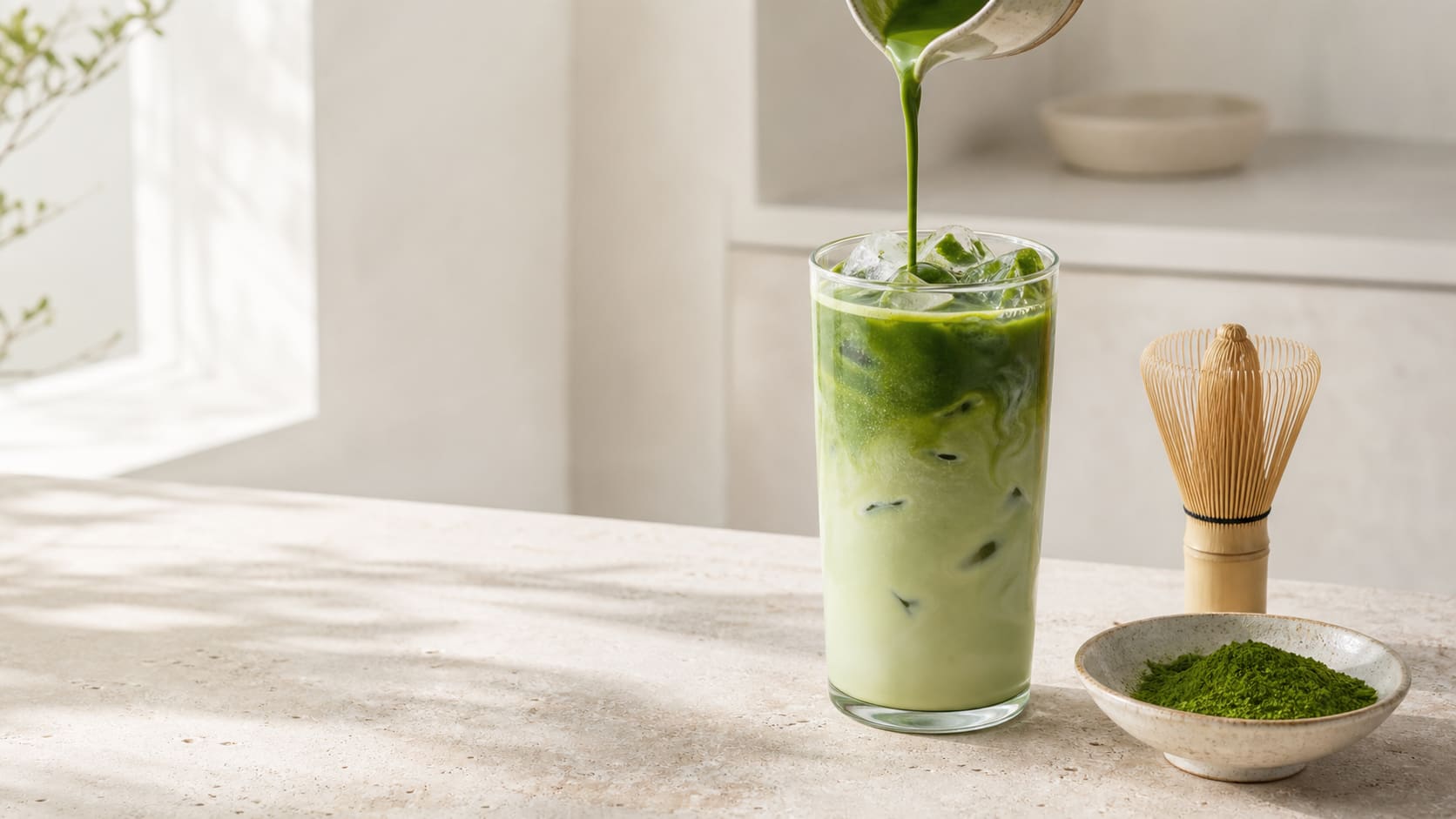
Prepare the matcha base exactly as above, but use 30 to 40 ml of cold or room-temperature water instead of hot. Whisk until smooth. Fill a tall glass with ice, pour in your cold milk, then add the matcha concentrate on top. The layered effect looks beautiful, but a quick stir with a spoon brings everything together.
Iced matcha lattes pair especially well with naturally sweet plant milks — oat and hazelnut are standouts. For something lighter, unsweetened almond milk with a drop of vanilla extract is a clean, refreshing option that won't overpower the tea.
Choosing the right milk
Your choice of milk has a direct and significant impact on both the texture and the taste of your latte. Here's how the most common options perform:
- Oat milk: Our top recommendation. Creamy, slightly sweet, froths well, and complements the umami notes of matcha beautifully. The best all-round choice for both hot and iced lattes.
- Whole dairy milk: The classic. Rich, smooth, produces a thick and stable foam. Rounds off vegetal notes effectively, though it can mask more subtle flavours.
- Almond milk: Light, with a gentle nuttiness. Produces moderate foam. Works well when you want a cleaner, less heavy result.
- Soy milk: Good foam, relatively neutral flavour. One caution — it can curdle if the water temperature is too high, so let your matcha base cool slightly before combining.
- Coconut milk: Strong, distinctive flavour that tends to overpower the matcha. Best avoided unless you're specifically after a tropical-leaning drink rather than a pure matcha latte.
Common mistakes to avoid
- Using boiling water: Water above 85°C damages the amino acids in matcha (particularly L-theanine) and pulls out harsh, bitter compounds. Stick to 60–70 °C for a clean, sweet result.
- Skipping the sieve: Matcha clumps don't dissolve with whisking alone. Sifting before you add water is the single easiest upgrade to your latte routine.
- Too much milk, not enough matcha: If you're using 1 g of matcha for 250 ml of milk, you're making green-tinted milk, not a latte. Respect the ratio.
- Using culinary-grade matcha: Culinary matcha is designed for baking, where sugar and butter compensate for its bitterness. In a latte, it tastes harsh and looks dull. A premium grade is the right tool for the job.
- Adding sugar automatically: Taste your latte plain first. Quality matcha — especially premium and ceremonial grades — has a natural sweetness and umami depth that sugar can actually flatten rather than enhance.
Variations worth trying
Once you've nailed the basic matcha latte recipe, these variations are worth exploring:
- Vanilla matcha latte: Add half a teaspoon of pure vanilla extract or a small amount of vanilla paste. The pairing is immediate and elegant — vanilla enhances matcha's sweetness without competing with it.
- Lavender honey matcha latte: Steep a small pinch of culinary lavender in your warm milk for a few minutes, strain, then prepare the latte as normal. Subtle and surprisingly refined.
- Double-shot matcha latte: Use 3 g of matcha with the same amount of milk. This is for those who want a bolder tea flavour and a real caffeine kick to start the morning.
- Hazelnut matcha latte: Swap in hazelnut milk for a light, nutty undertone that softens the vegetal character of the matcha. Particularly good as an iced version.
Our practical advice
If you're making a matcha latte every day — or close to it — two small investments will make the biggest long-term difference: a quality premium-grade matcha and a fine-mesh sieve. Everything else is secondary. A bamboo chasen is a lovely tool and produces the best foam, but an electric frother gets the job done on busy mornings.
And if you've never had a properly made matcha latte — with the right grade, the right temperature, and the right ratio — you might be surprised by how different it tastes from what coffee chains serve. Most commercial matcha lattes are made with culinary-grade powder, excessive sugar, and flavoured syrups. A well-made version at home is quieter, more complex, and far more satisfying.
Read next
To go further, see Matcha Overnight Oats: A Healthy Breakfast in 5 Minutes, then Iced matcha latte: a smooth, balanced recipe. For a complementary angle, also read Which Matcha Should You Choose for a Matcha Latte?.