Hojicha Powder Latte: A Warm, Roasted Alternative to Matcha
A hojicha latte is the warm, roasted side of Japanese tea: toasty, smooth and easy to make at home. Where a matcha latte is bright and vegetal, hojicha brings notes reminiscent of toasted grain, nuts and gentle caramel. It is a different flavour profile, not a lesser version of matcha.
What is hojicha powder?
Hojicha is Japanese green tea that has been roasted. Roasting changes the aroma and colour, moving the cup away from fresh green notes towards a deeper, brown and toasted profile. In powder form, it can be whisked into a small amount of water and combined with milk for a latte.
The appeal is balance: enough tea character to remain distinctive, with a rounded profile that works particularly well with dairy or plant-based milk.
Hojicha latte recipe
This is a reliable starting point for one cup. Adjust the powder or milk after tasting rather than masking a weak base with sugar.
Ingredients
- 2 g hojicha powder (about 1 teaspoon)
- 30–40 ml hot water, around 70°C
- 150–180 ml milk of your choice
- Optional: a small amount of maple syrup or mild honey
Method
- Sift the powder into a small bowl if it is clumpy.
- Add the hot water and whisk until smooth.
- Warm the milk gently; froth it if you like a lighter texture.
- Pour the milk over the hojicha base, then taste before sweetening.
Hot or iced?
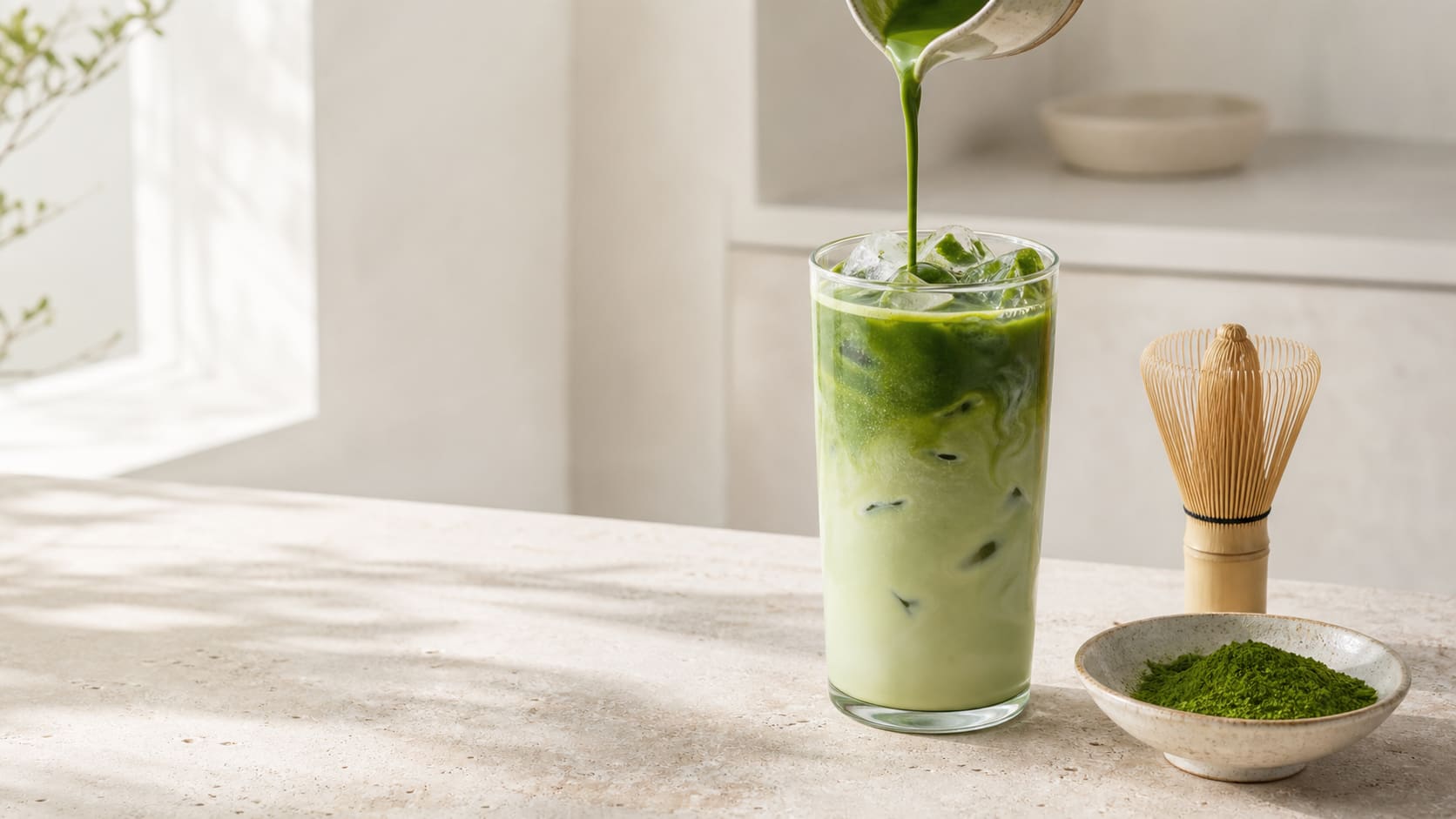
For an iced hojicha latte, make the same concentrated base with 20–30 ml water, add ice and cold milk, then pour the tea over the top. The shorter water ratio helps the roasted flavour remain present after the ice melts.
Choosing milk and sweetness
Oat milk extends the cereal-like, toasted character; whole milk brings a rounder cup; almond milk can underline the nutty notes. Start unsweetened. If you want more sweetness, add a small amount after the first taste so the tea remains recognisable.
How to avoid a bland latte
- Keep the base concentrated: whisk the powder with a small amount of water first.
- Use enough powder: 2 g is a useful starting point for 150–180 ml milk.
- Do not overheat the milk: a gentle temperature preserves a clean flavour.
- Adjust tea before sugar: a little more powder is usually more useful than extra syrup.
Hojicha or matcha?
Choose hojicha when you want roasted, rounded flavours; choose matcha when you want a brighter, vegetal profile. Both can make excellent lattes. For a green, café-style version, see our matcha latte recipe; for the technique behind it, read how to prepare matcha.
About caffeine
Hojicha and coffee both contain caffeine, but there is no universal “one cup” comparison that applies to every preparation. The result depends on the tea material, the amount of powder used, the water, the serving size and the recipe. The European Food Safety Authority likewise notes that caffeine concentrations and serving sizes vary. If caffeine is a concern for you, use the product information for your tea, keep the serving modest and seek individual advice from a qualified health professional when needed.
Sources: EFSA, Caffeine (variation by product and serving); Mizukami, Sawai & Yamaguchi, Journal of Agricultural and Food Chemistry (roasting and the aroma profile of houjicha).
Find hojicha powder
The 50 g Hojicha item is currently unavailable. For higher-volume use, the Hojicha Powder, 500 g is currently listed as available; always check the product page for the live stock status before ordering.
Read next
Read next
To go further, see Hojicha: The Roasted Japanese Tea Nobody Knows About (Yet), then Hojicha Powder in Switzerland: How to Choose and Use It. For a complementary angle, also read Matcha vs Hojicha Caffeine: What Actually Changes Your Cup.