How to Prepare Matcha: Traditional and Modern Methods
Preparing matcha properly changes everything. An excellent powder can taste harsh if the water temperature is too high, the ratio is off, or the clumps are not broken down. Conversely, even a modest matcha becomes far more enjoyable when prepared with precision. How to prepare matcha is not an aesthetic detail — it is an essential part of the flavour.
This guide makes the process simple. You do not need to be a specialist or turn your kitchen into a tea pavilion. You need to understand three levers: matcha quality, water temperature, and mixing method. If you are unsure which grade suits you, read our guide to matcha grades.
Start with the Right Foundation
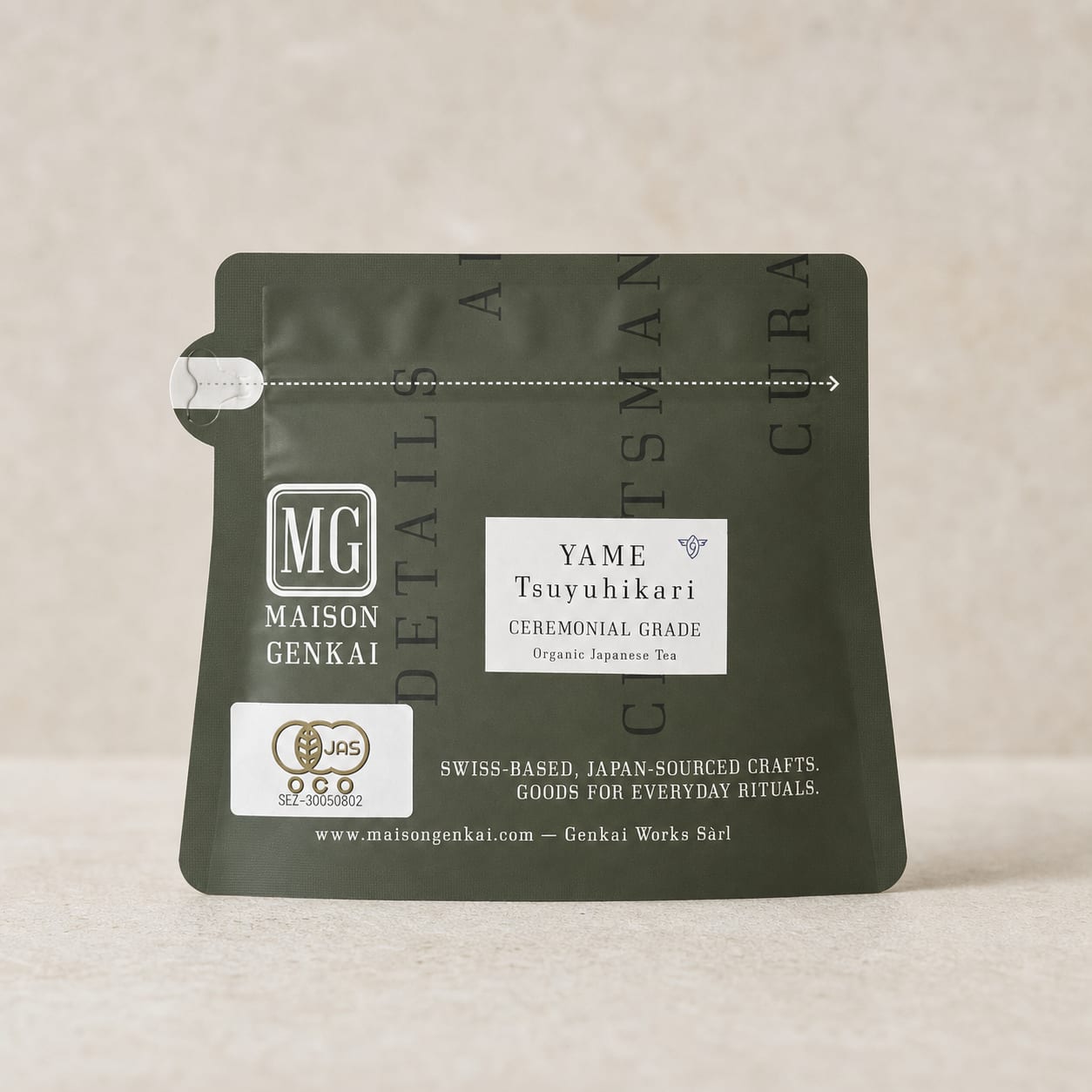
For a pure bowl whisked with water, you need a cleaner, softer powder than a simple culinary matcha. Traditional matcha preparation and product selection always go hand in hand — a mismatch between grade and use produces disappointment.
Maison Genkai sources its premium matcha and hojicha exclusively from Yame, Fukuoka. Current formats, prices and availability are listed in the shop.
Essential Equipment
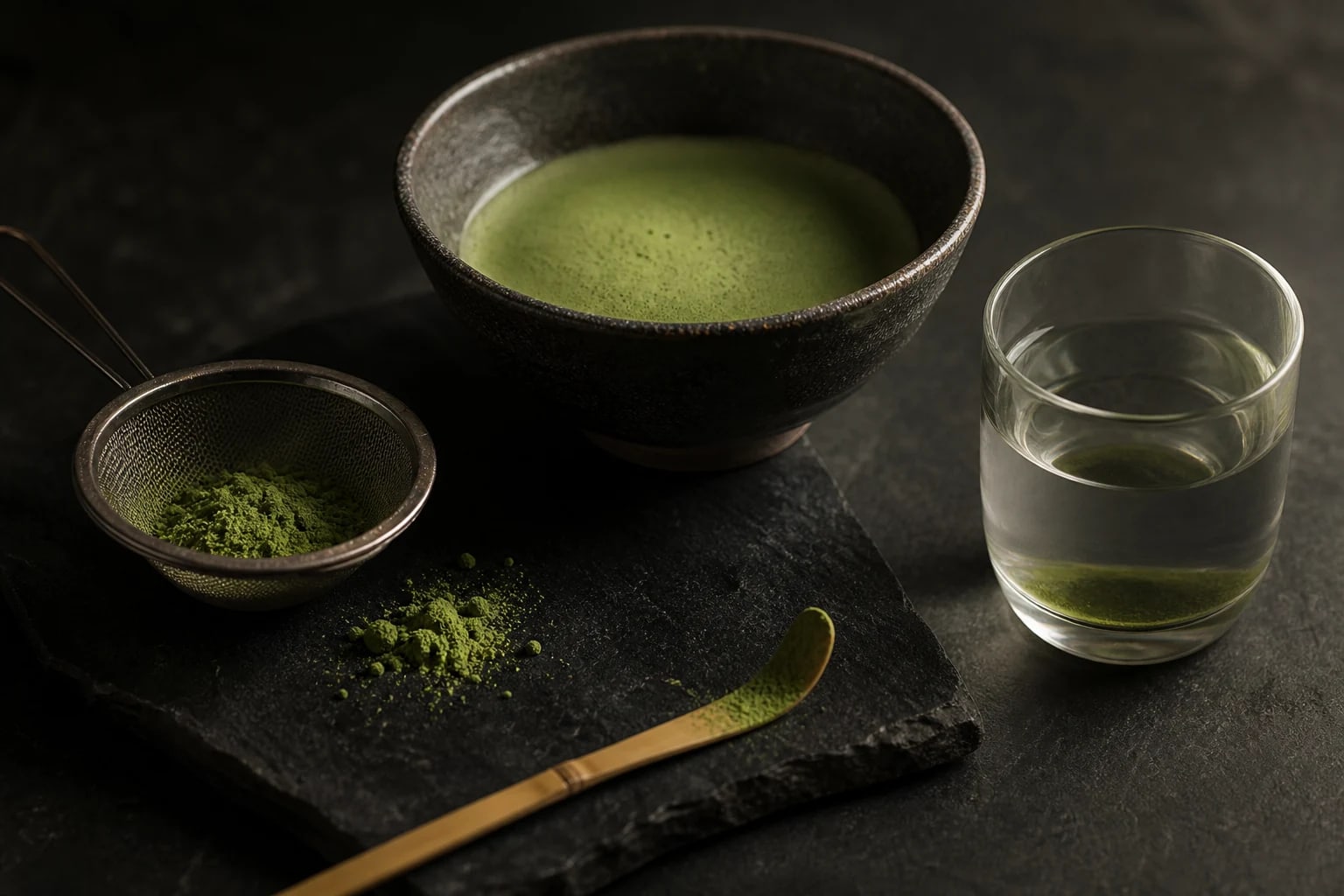
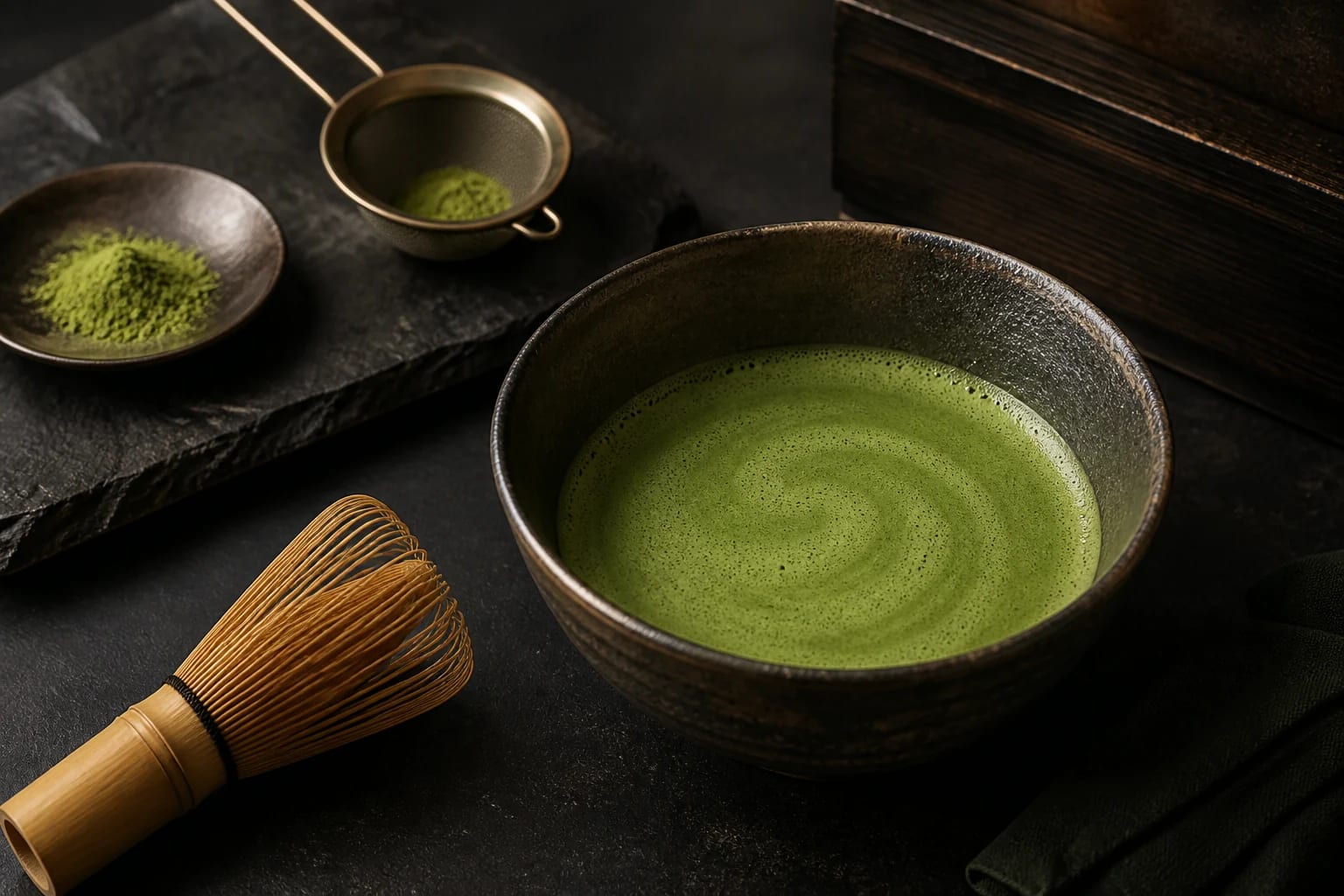
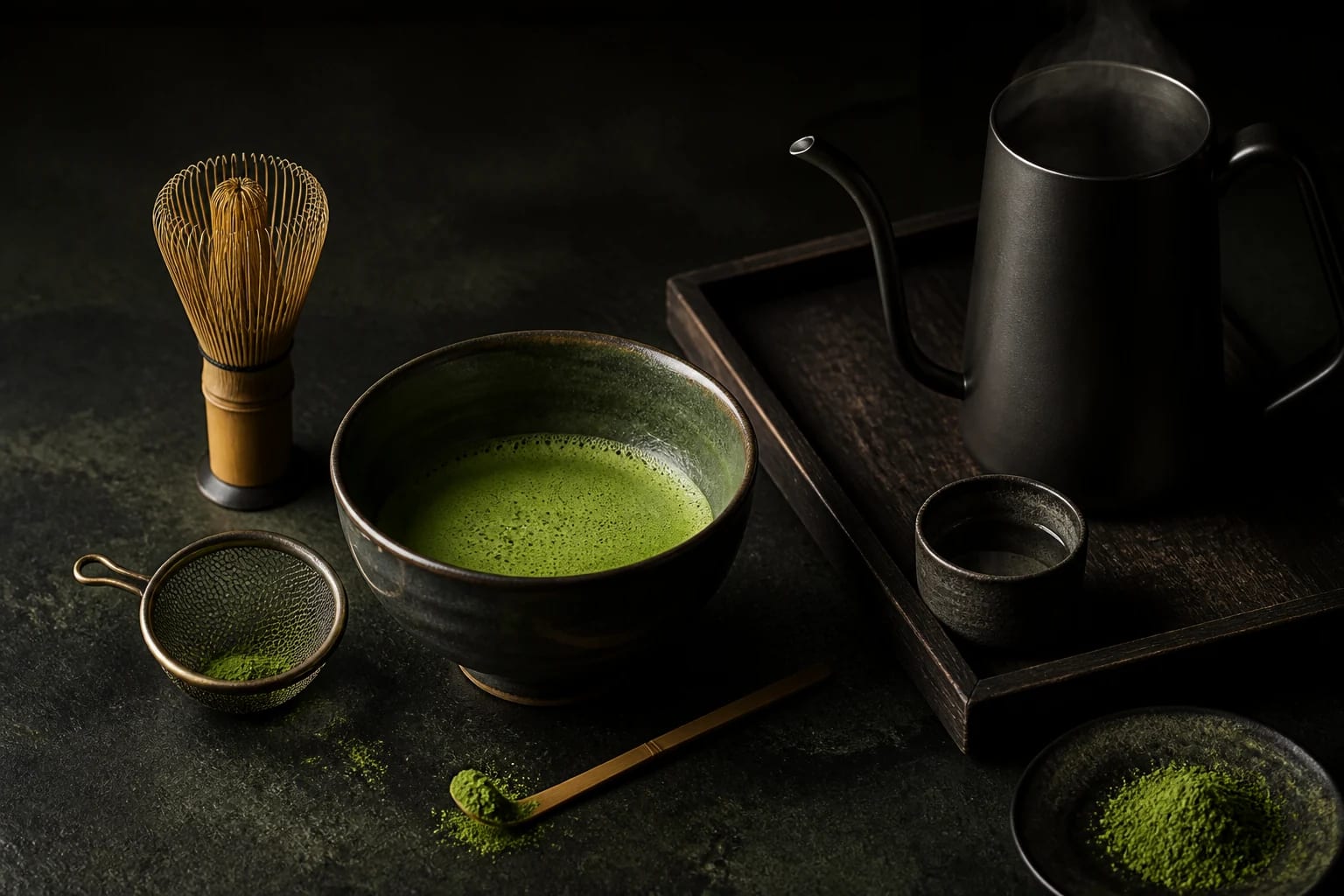
The most practical trio is the bowl, sieve, and whisk. The bowl gives your wrist room, the sieve prevents clumps, and the whisk creates a smooth texture.
- Chasen (茶筅) — Bamboo whisk with 80–100 tines. The most important tool for achieving fine, uniform froth.
- Chawan (茶碗) — A wide matcha bowl allowing proper whisking motion.
- Chashaku (茶杓) — Bamboo scoop. One level scoop equals roughly 1 gram.
- Fine-mesh sieve — Essential for breaking up clumps. Never skip this step.
If you lack a bamboo whisk, an electric milk frother works in a pinch — less finesse, but better than an incomplete mix.
The Reference Ratio
For classic usucha, use approximately 1.5 to 2 grams of matcha for 60 to 80 ml of water. Too much water and the matcha loses presence. Too much powder without adjusting the rest, and the cup becomes dense. The right ratio lets the tea breathe — structured enough to express the profile, balanced enough to remain pleasant.
Water Temperature
The ideal zone sits between 60–70 °C. Above that, bitterness rises and delicate notes disappear. Below it, the matcha seems closed. Many people use boiling water out of habit, then conclude matcha tastes aggressive — in reality, the preparation forces that sensation.
Bring water to a boil, then let it cool two to three minutes before pouring. If you own a variable-temperature kettle, set it to 75°C for consistent results.
Traditional Usucha (薄茶): Thin Tea
This is the standard way to enjoy ceremonial matcha and the foundation of any matcha ceremony at home.
- Sift the powder into the bowl through a fine-mesh sieve.
- Add a small splash of hot water — about 15 ml — and work the powder into a smooth paste with the chasen. This eliminates micro-clumps.
- Pour the remaining water (60–80 ml total) at 60–70 °C.
- Whisk vigorously in a rapid W or M motion from the wrist, not the arm. Keep the tines slightly lifted off the bottom. After 15–20 seconds, a fine layer of micro-foam should cover the surface.
The matcha whisking technique is about beating quickly to incorporate air while maintaining homogeneous texture. The goal is not spectacular foam — it is a fine, clean surface with a supple mouthfeel.
Pro tip: Pre-warm your chawan with hot water, swirl, discard. This keeps matcha at drinking temperature longer and softens the chasen tines.
Koicha (濃茶): Thick Tea
Koicha uses more powder and less water. It demands a noble matcha because every flaw becomes visible.
- Sift 3–4 grams of matcha into your chawan.
- Add only 30–40 ml of water at 60–70 °C.
- Instead of whisking, knead slowly in gentle circular motions — no foam should form.
- The result is a thick, paint-like consistency with intense umami.
If you are starting out, master a clean usucha first. You will develop a better sense of what matcha can express before approaching this demanding format.
Modern Methods Work Too
A shaker, frother, or small blender can deliver excellent results — provided you sift when possible, avoid boiling water, and maintain a coherent ratio. A good modern result beats a poorly executed traditional matcha preparation every time.
Modern Matcha Latte
- Sift 2 grams of matcha into a cup.
- Add 30 ml of hot water (60–70 °C) and whisk until smooth.
- Heat and froth 200 ml of milk — oat milk works beautifully.
- Pour frothed milk over the matcha concentrate.
- Optional: add honey or vanilla syrup to taste.
For full details, see our café-quality matcha latte recipe.
Iced Matcha
- Sift 2 grams of matcha into a glass or shaker.
- Add 30 ml of room-temperature water and whisk or shake vigorously.
- Fill with ice, then top with cold water or milk.
Why Does Matcha Clump?
Matcha absorbs moisture rapidly. Small clumps on contact with water are normal, not a quality defect. But if you skip sifting or pour too much water at once, they become hard to dissolve. Always sift first, then start with a small volume to form a smooth paste before adding the rest.
Why Is the Foam Not Forming?
Foam depends on powder fineness, whisk condition, speed, and water amount. A new or well-hydrated whisk performs better. Coarse powder foams less. A clump-heavy base hinders texture. But do not confuse foam with quality — taste remains the primary criterion.
Common Mistakes to Avoid
- Water too hot — Always 60–70 °C. Boiling water can make matcha taste harsher and mute its most delicate aromas; it is unnecessary for good dispersion.
- No sieve — Matcha clumps easily. Always sift before whisking.
- Too much water — Produces a thin, flavourless cup. Respect the ratio.
- Whisking too slowly — The technique requires rapid, light wrist movements, not slow stirring.
- Culinary matcha for a pure cup — Use at minimum a premium grade for drinking straight.
- Circular whisking — Use a W or M pattern for proper aeration.
How to Tell If Your Cup Is Successful
A good cup is smooth, clean, and alive. The colour should be a vibrant deep green, the texture supple, the aroma fresh. On the palate, expect vegetal, round, sometimes umami notes with gentle tension on the finish. It should not scorch, feel dusty, or vanish after two seconds. If you achieve this, you are on solid ground. Traditional matcha preparation is less complicated than people claim — it mostly demands consistency.
How to Store Matcha
Correct preparation means nothing if the powder has lost its freshness. Matcha is sensitive to air, light, heat, and odours. Keep it tightly sealed, away from light, not near a stovetop or hot coffee machine. If refrigerating, use an airtight container and let it reach room temperature before opening to prevent condensation. Our grade selection guide and matcha FAQ help avoid errors before you even begin.
- Reseal immediately after every use
- Avoid heat, light, and humidity
- Consume more quickly after opening to preserve freshness
Can You Prepare Matcha Without a Traditional Bowl?
Yes. The traditional method is the best way to learn, but a shaker works for iced matcha, a frother handles lattes, and any wide bowl serves at home. The essentials are elsewhere: sift, measure precisely, use non-boiling water, do not let powder sit in clumps. Our matcha latte recipe shows how to translate traditional foundations into a modern routine.
Yes. Use a clean bowl with enough room to move the whisk without splashing. Sift the tea, measure the water and start gently. A particular bowl matters less than having space to mix and a method you can repeat.
Read next
For cafés, restaurants and retailers
Japanese tea for your business
Serving matcha or hojicha, or stocking it in your shop? Tell us how you plan to use it and your expected volumes. We can discuss samples, pack sizes and a quote for your business.
Yame matcha delivered in Switzerland
Find a matcha for your daily ritual
For a morning latte or a bowl of tea, explore our matcha from Yame. Each product page shows the pack size, price and current availability.
Shop matcha