Where to Buy Matcha in Switzerland — 2026 Guide
Where to buy matcha in Switzerland in 2026
Matcha has established itself in Switzerland as more than a passing trend. Whether you're looking for ceremonial matcha for daily usucha or culinary matcha for baking, the Swiss market now offers several options – but not all are equal. This guide helps you identify the best sources of authentic matcha in Switzerland, with concrete criteria for making the right choice.
What to know before buying matcha in Switzerland
Origin and traceability: why it matters
Real matcha comes exclusively from Japan. The main producing regions are Uji (Kyoto), Nishio (Aichi) and Yame (Fukuoka). A serious seller always indicates the region of origin, the producer's name and the harvest (ichibancha for the first spring harvest, the highest quality). Be wary of matchas simply labelled "Japanese matcha" with no further detail.
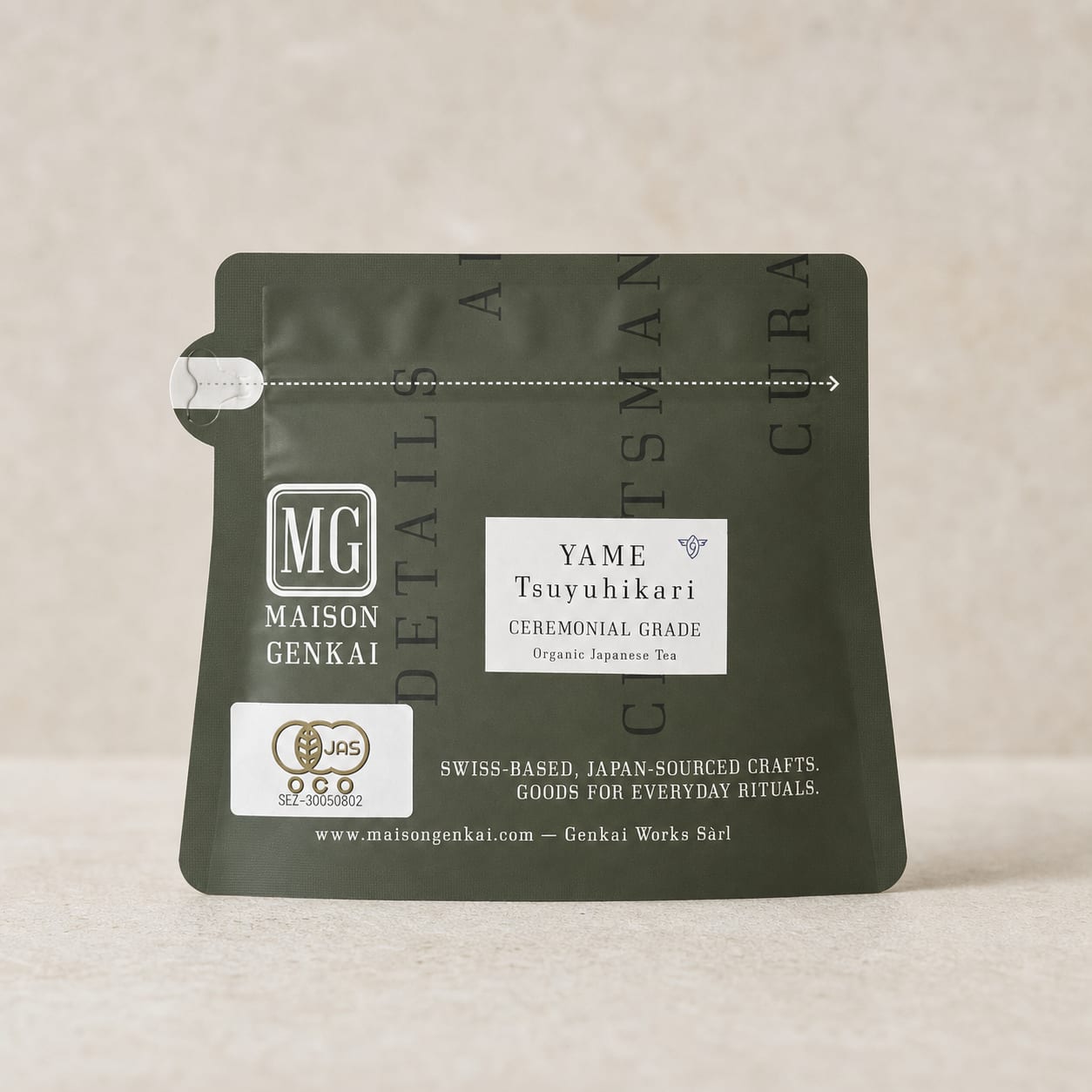
Each region has its own character. Uji is the most storied, it supplies the imperial court and is synonymous with prestige, producing deep umami profiles used in tea ceremony. Nishio accounts for the majority of Japan's matcha volume and delivers reliable, well-balanced quality at accessible price points. Yame, in Fukuoka, is the smallest and least commercially known of the three, yet among specialists it commands the highest regard for sweetness and complexity. Maison Genkai sources exclusively from Yame artisanal producers for this reason: the region's low-yield, handpicked bushes deliver a quality that larger industrial operations cannot replicate.
Matcha grades explained
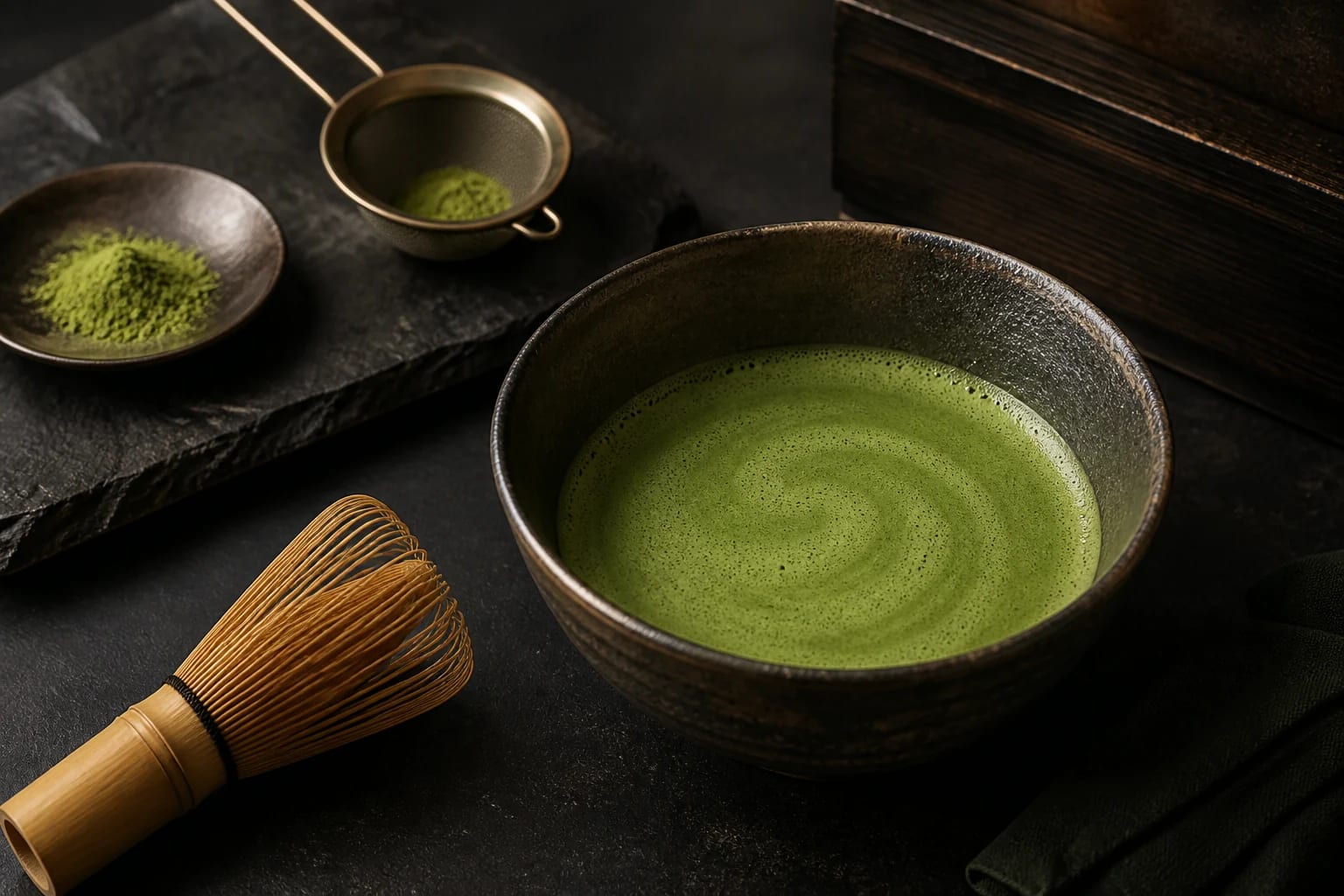
- Ceremonial matcha, meant to be drunk pure, whisked with a chasen. Bright green colour, pronounced umami taste, zero bitterness
- Premium matcha: versatile, excellent as a latte or drunk pure. Good quality-price balance for daily use
- Culinary matcha, designed for cooking and baking. More bitter, less vibrant colour, more accessible price
Certifications to look for
Two certification frameworks are relevant when buying matcha in Switzerland. The JAS Organic (Japanese Agricultural Standard) label is Japan's official organic certification, governed by the Ministry of Agriculture and directly comparable to EU standards – it confirms no synthetic pesticides or chemical fertilisers were used. The EU Organic label (Bio Suisse-equivalent for imported goods) is what you will see on European retail packaging; a product can carry both JAS and EU Organic simultaneously.
Certification is a floor, not a ceiling. Conventional matcha from a traceable single-origin Yame farm often surpasses a certified organic product of unknown provenance in both flavour and safety. Origin and producer transparency outweigh the label alone. If a vendor can tell you the farm name and harvest date, that is worth more than a generic organic sticker.
Price ranges in CHF
For 30 g of quality matcha in Switzerland, expect to pay between CHF 15 and CHF 45 depending on grade. Below CHF 10 for 30 g, quality is rarely there, you are likely buying a low-grade or Chinese-origin powder. Between CHF 15-25, you find solid premium-grade matchas suitable for lattes and everyday drinking. Between CHF 25-45, you enter ceremonial and high-ceremonial territory. Above CHF 50, you enter the competition or ultra-premium segment, which most consumers do not need unless preparing matcha for formal ceremony.
Best options for buying matcha in Switzerland
1. Specialised online shops
This is often the best value for quality and traceability. E-shops specialising in Japanese tea import directly from producers, ensuring freshness and exact origin information for each batch. Unlike a shelf product that may have been sitting in a warehouse for months, direct-import specialists receive small batches and rotate stock frequently.
Maison Genkai imports its matchas directly from the Yame region (Fukuoka), renowned for exceptional teas. Each product is sourced from artisanal producers with full traceability and ships from Switzerland, meaning no customs delays or surprise import duties for Swiss customers:
- Premium Matcha 30 g: CHF 19.90, ideal for daily lattes and discovery
- Ceremonial Matcha 30 g: CHF 29.90, for traditional usucha
- High Ceremonial Matcha 30 g: CHF 39.90, first harvest, competition quality
- Organic Hojicha 30 g: CHF 14.90, roasted alternative, low in caffeine
Delivery throughout Switzerland, free from CHF 60.
2. Japanese grocery stores
Japanese grocery stores in Switzerland (Zurich, Geneva, Lausanne, Basel) generally offer matcha. The advantage – you can see the product. The disadvantage: stock sometimes turns slowly, and matcha: sensitive to oxidation, loses its properties after opening or after several months on a shelf. Always check the production date, not just the best-before date.
3. Organic shops and fine food stores
Retailers like Globus, Manor Food or certain organic shops offer matcha. Quality varies considerably. Read the label carefully: if the Japanese origin is not explicitly mentioned, if no region is named, or if the price seems suspiciously low, move on. Some stores carry high-quality products; others stock generic powders from undisclosed origins dressed in attractive packaging.
4. Supermarkets
Coop and Migros now offer matcha powder in their tea sections. These products are generally culinary grade, suitable for baking but disappointing as a pure drink. They serve as an accessible entry point for those curious about matcha – but once you have tasted a genuine single-origin ceremonial matcha, the difference is immediate and unmistakeable.
Online vs. retail: a practical comparison
| Channel | Traceability | Freshness | Price | Convenience |
|---|---|---|---|---|
| Specialised online (CH) | High | High | Competitive | Delivered home |
| Japanese grocery | Medium | Variable | Mid-high | In person |
| Organic / fine food | Low-medium | Variable | Mid-high | In person |
| Supermarket | Low | Low | Low | Everywhere |
How to spot low-quality matcha
The matcha market has significant quality variance, and premium packaging does not guarantee premium content. Here are the five signals of a substandard product.
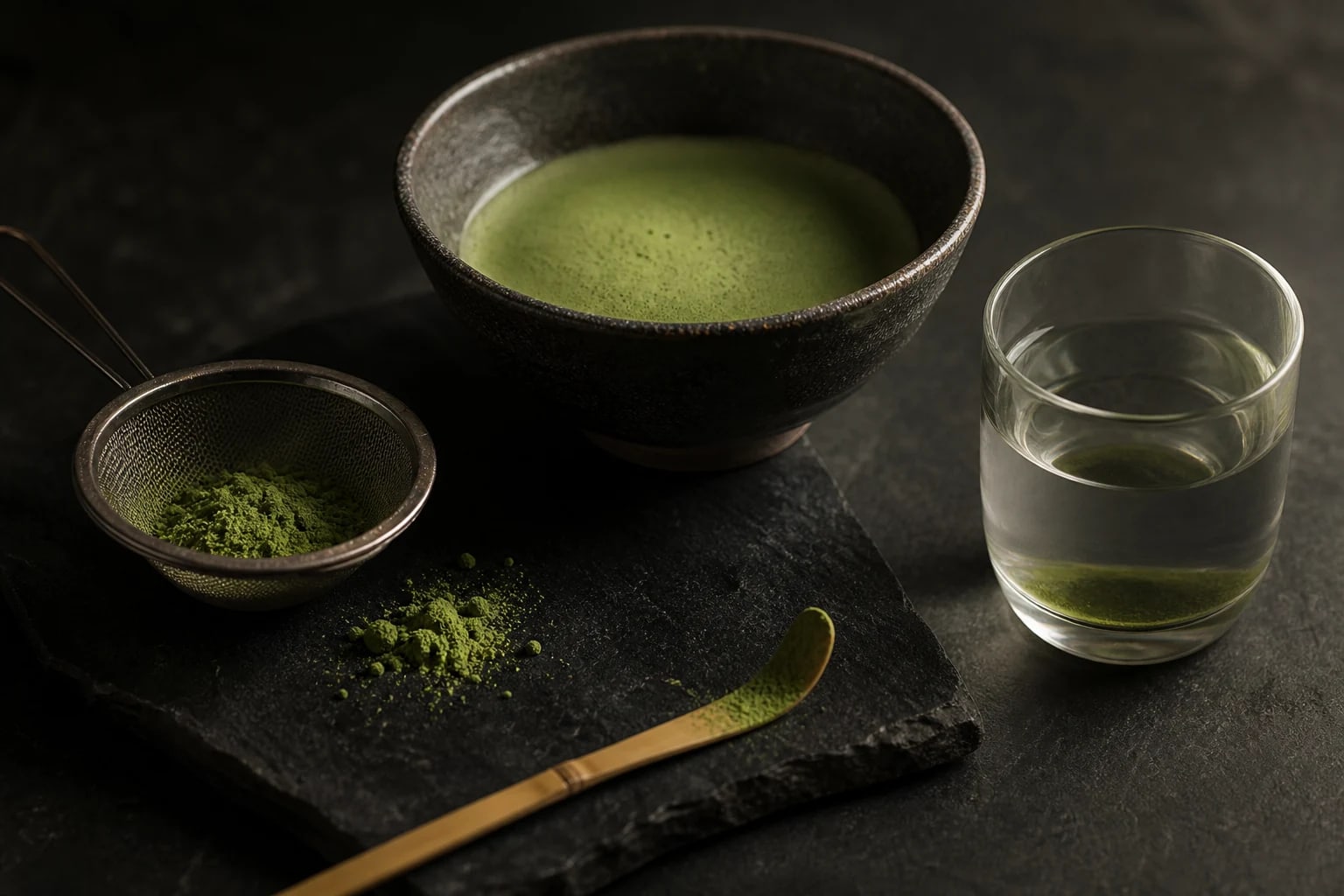
- Colour, good matcha is bright, almost electric green. A dull, pale or yellowish green indicates inferior leaf quality, oxidation, or a non-Japanese origin. The vivid colour comes from chlorophyll in shade-grown leaves; it cannot be faked convincingly
- Texture: the powder should be ultra-fine, almost silky to touch. Granular or coarse powder indicates low-grade leaves or insufficient grinding, often a sign of culinary-grade material mislabelled as ceremonial
- Smell: fresh vegetal notes, slightly sweet, reminiscent of fresh grass or seaweed. A dry hay smell or absence of aroma indicates old or poorly stored product
- Vague origin claims, "100% Japanese matcha" with no region, no producer, no harvest season is a red flag. Reputable importers can name the farm
- Price anomalies: genuine ceremonial-grade matcha cannot be produced at CHF 5-8 per 30 g. If it seems too cheap, it is either culinary grade at best or non-Japanese origin at worst
Storage tips to preserve quality
Even the finest matcha degrades quickly once exposed to air, heat, light or moisture. To protect your investment after purchase: keep the tin or pouch in the refrigerator, tightly sealed; let it reach room temperature before opening to prevent condensation from entering the powder; consume within 4-6 weeks of opening. If you buy in bulk, consider portioning into smaller airtight containers so the main supply is opened as infrequently as possible. Matcha stored correctly in an unopened container can last 6-12 months without meaningful quality loss.
FAQ
What is the best matcha available in Switzerland?
The best matcha depends on your use. For daily latte consumption, a premium matcha (CHF 18-25/30 g) offers the best value. For tea ceremony, opt for a high ceremonial first harvest matcha (CHF 35-45/30 g). The single most important factor is traceability – you want to know the region, the producer and the harvest year.
Can you buy organic matcha in Switzerland?
Yes. Look for JAS Organic (Japan's official organic standard) or EU Organic on the label. Note that organic certification does not equal superior taste, a conventional Yame matcha from a known farm can outperform an organic matcha of uncertain origin. Traceability matters more than the label.
Is matcha more expensive in Switzerland than in the rest of Europe?
Swiss prices are typically 10-15% above the European average, driven by logistics costs and the cost-of-living differential. However, Swiss-based online specialists ship without customs complications or TVA surprises, which makes them cost-competitive against ordering from abroad once all fees are counted.
How to store matcha after purchase?
Keep your matcha refrigerated in its original packaging, hermetically sealed. Consume within 4-6 weeks of opening for full flavour and nutritional value. Avoid exposure to light, heat and humidity at all times.
What is the difference between supermarket matcha and specialty matcha?
Supermarket matcha is typically culinary grade: more bitter, less aromatic, processed for volume rather than flavour. Specialty matcha is imported in small batches, stored under optimal conditions, and traceable to a specific producer and harvest. The difference is apparent from the first sip.