Hojicha Powder in Switzerland: How to Choose and Use It
Hojicha powder transforms roasted Japanese tea into a versatile ingredient: hot or iced latte, cream, ganache, ice cream, tiramisu or non-espresso drink. Its taste is often reminiscent of toast, hazelnut, cocoa or caramel, with much less vegetal content than matcha. But not all powders behave the same in water, milk or a recipe.
In Switzerland, the offer mixes small premium boxes, organic sachets, powders intended for lattes and professional formats. This guide explains what hojicha powder actually is, how to assess its quality, what dosage to use, and how to compare the cost per serving without being guided solely by the color or the word “premium.”
What is hojicha powder?
Hojicha is a roasted Japanese green tea. The Japanese Ministry of Agriculture describes it as a tea obtained by roasting sencha or kawayanagi in particular. Heat transforms the aromatic profile: green notes recede in favour of toasted, sweet and warm aromas.
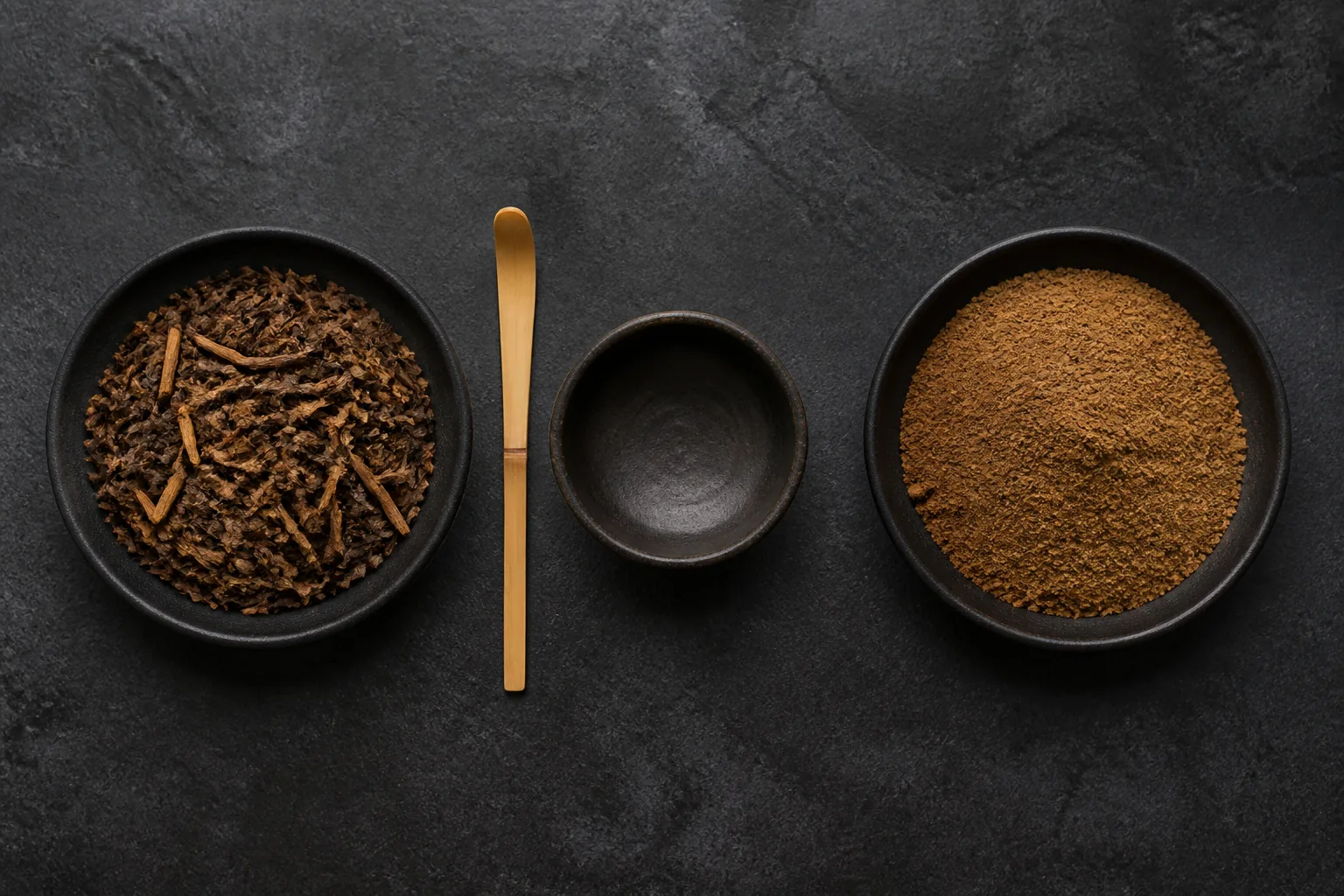
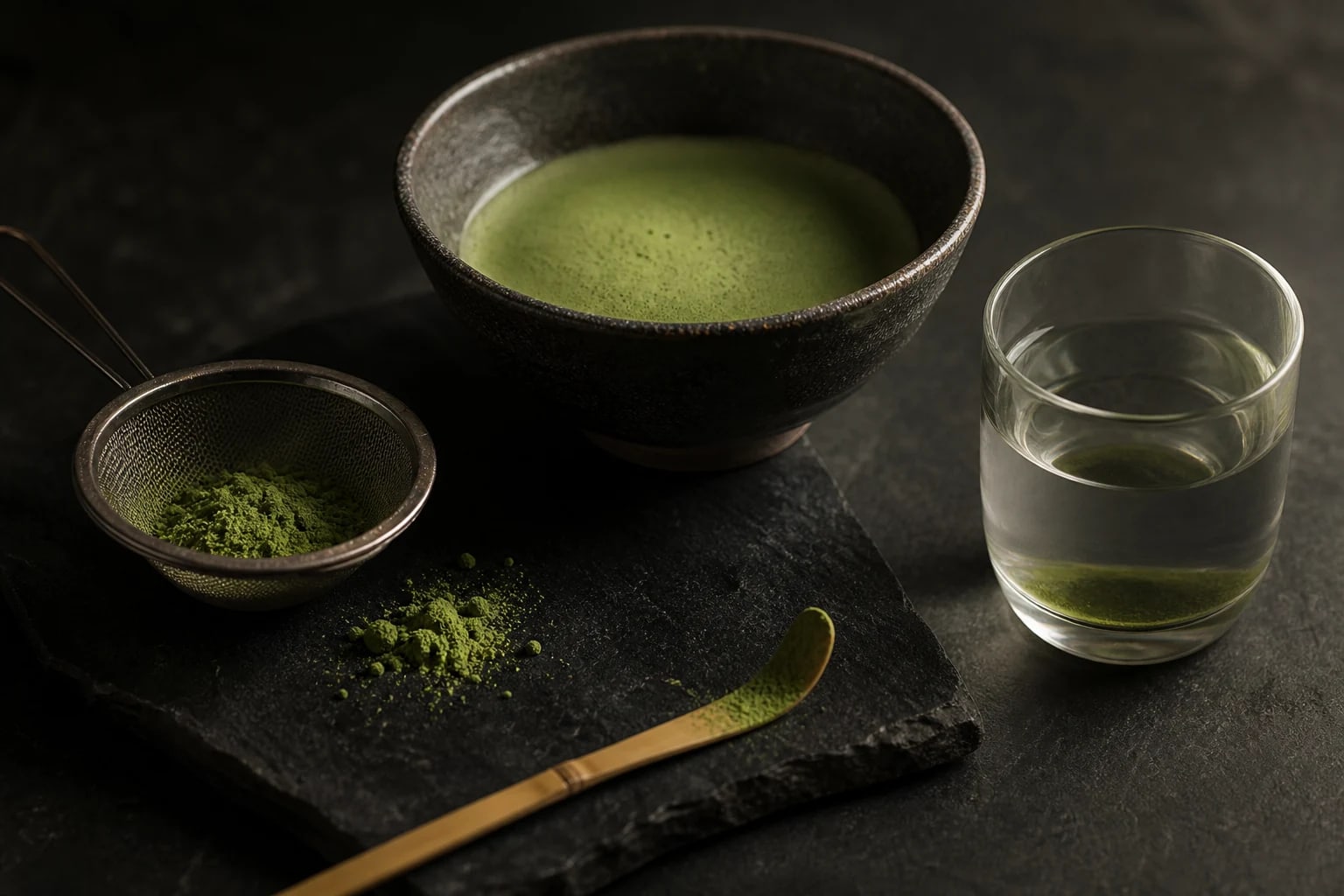
Hojicha powder is this roasted tea reduced into fine particles. Unlike a classic infusion, the material remains in the drink or the recipe. It does not “dissolve” in the sense of sugar: it disperses. Fine grinding, good premixing and sufficient stirring therefore make a big difference to the texture.
Do not confuse pure powder and instant preparation. A pure powder contains only ground roasted tea. A mix can add sugar, milk powder, flavorings or texturing agents. Both can be practical, but they do not meet the same needs and are not dosed in the same way. The list of ingredients is the first check.
Hojicha in leaves or powder: two different uses
The leaves are made for infusion. They give a clear liquor and allow several passages depending on the tea. The powder provides more body and remains present in the cup. It is therefore more suitable for lattes and cooking, where a light infusion would be lost in the face of milk, butter or chocolate.
Powder is not automatically “better” than leaves. It is more concentrated in subject matter and easier to integrate. To drink a light hojicha after a meal, the leaves are often ideal. To obtain a creamy drink or color a pastry evenly, the powder is more predictable.
Our article Hojicha: roasted Japanese tea presents the story and general style. Here, the angle is deliberately practical: choose a powder sold in Switzerland and use it correctly.
Six criteria for choosing a good hojicha powder
1. A short ingredient list
To check the recipe yourself, search for “roasted, ground Japanese green tea” or an equivalent wording. A pure powder allows sugar and milk to be adjusted separately. If you are buying a mix, compare the actual percentage of tea and sugar per serving rather than just the price of the packet.
2. An indicated origin
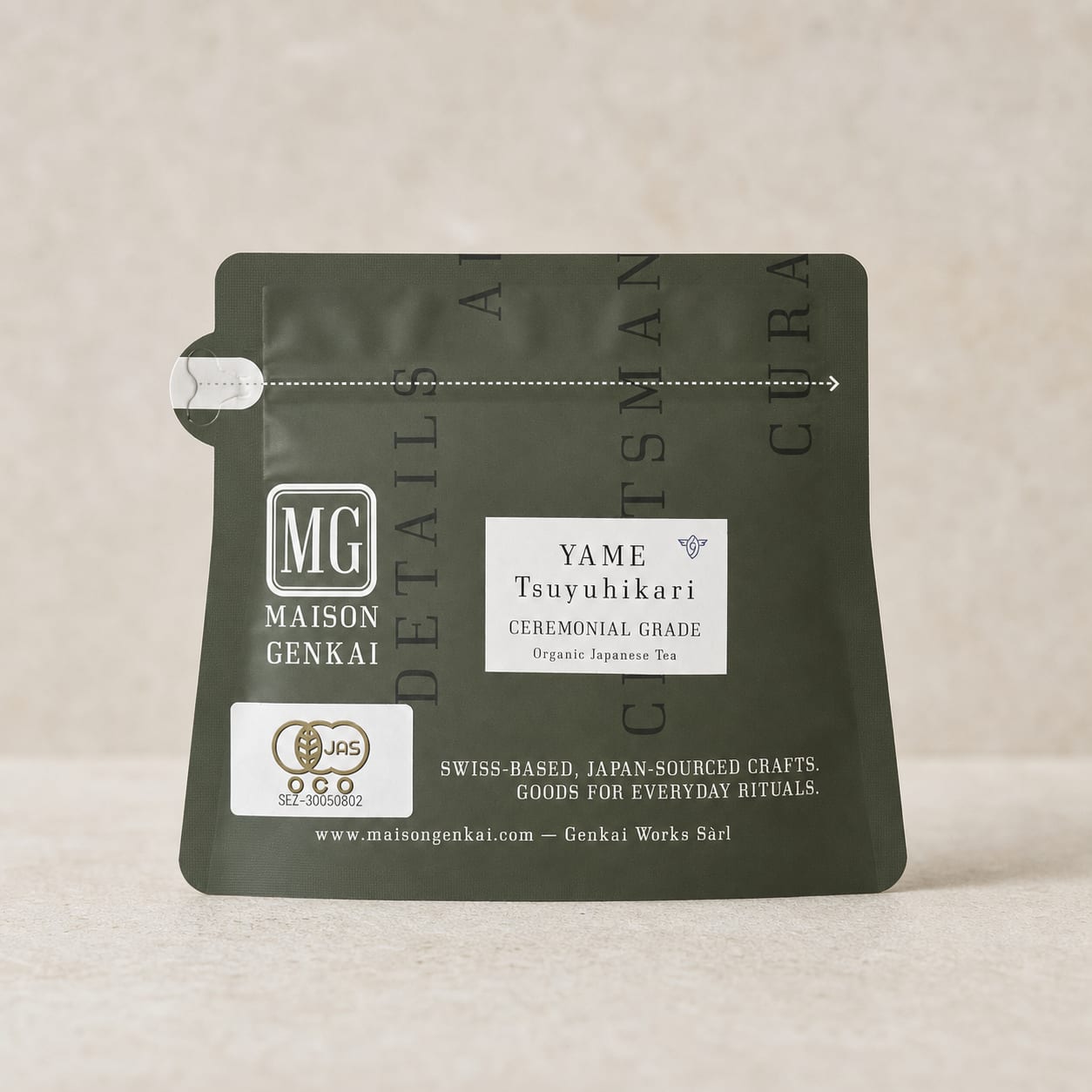
“Japan” is the minimum useful information. A more precise region and an identifiable supplier improve traceability. The premium hojicha from Yame comes from Yame, Fukuoka. This information links the product to the same Japanese supply chain as the rest of the range, without claiming that the region alone determines the final taste.
3. Clean roasting, not burnt
Brown is normal: hojicha should not be green like matcha. The color varies from caramel to deeper brown depending on the raw material and roasting. A very dark powder is not necessarily more intense or more qualitative. When opening, look for a clean scent of toast, hazelnut or cocoa rather than an ashy and pungent smell.
Research on hojicha flavors shows the role of compounds formed or enhanced during roasting. It is more accurate to speak of an aromatic balance than of a universal “perfect” temperature: the raw material, the equipment and the desired profile change the result.
4. A grind adapted to the use
For a latte, a fine powder disperses more easily and gives a less sandy feel. For baking, consistency is just as important: coarse particles create dark spots and localized bitterness. Rubbing a small amount between two clean fingers gives a clue, but the litmus test remains dispersion in a water base.
5. Opaque and airtight packaging
Roasted aromas are volatile and the powder offers a large contact surface with the air. An opaque bag or box, tightly closed after each use, protects better than a transparent jar placed near a hot machine. Large professional formats should ideally be distributed or handled in such a way as to limit prolonged openings.
6. A consistent format with rotation
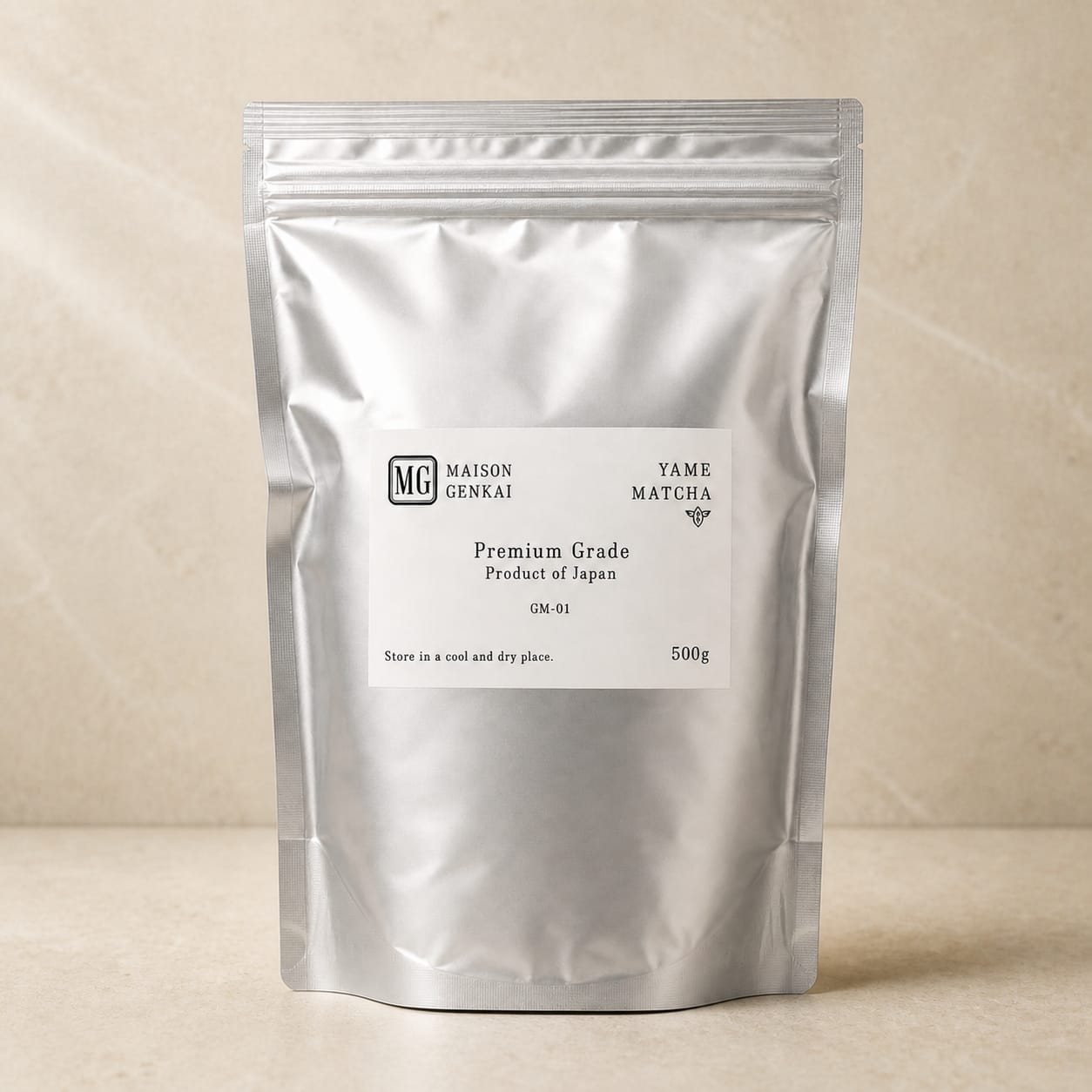
An individual who prepares two lattes per week will use 50g in a few weeks. A coffee can consume 500 g quickly. The large format reduces the cost per gram only if the product turns fast enough to maintain its fragrance. Slow-moving inventory costs more than the apparent savings.
What taste to expect?
A balanced hojicha powder gives a toasty attack, aromatic sweetness and a clean finish. The descriptors hazelnut, caramel, cocoa, biscuit or wood are benchmarks, not added flavors. Milk often accentuates the perception of roundness; On the contrary, very sweet milk can make the drink heavy and mask the nuances.
Hojicha is regularly touted as “naturally low in caffeine.” The trend is plausible depending on the raw material and process, but the figure varies. A comparative study published in the Tea Research Journal shows that the composition differs between types of tea, without allowing a universal figure for all powders. For a conservative comparison, see our guide matcha, hojicha and caffeine.
Basic dosage for a hojicha latte
For a 200-250 ml cup, start with:
- 2 to 3 g of hojicha powder;
- 30 to 40 ml of water at around 80°C for this roasted hojicha powder — unlike matcha, which we prepare at 60–70°C;
- 160 to 200 ml of hot or cold milk;
- 0 to 8 g of sugar or syrup depending on the audience.
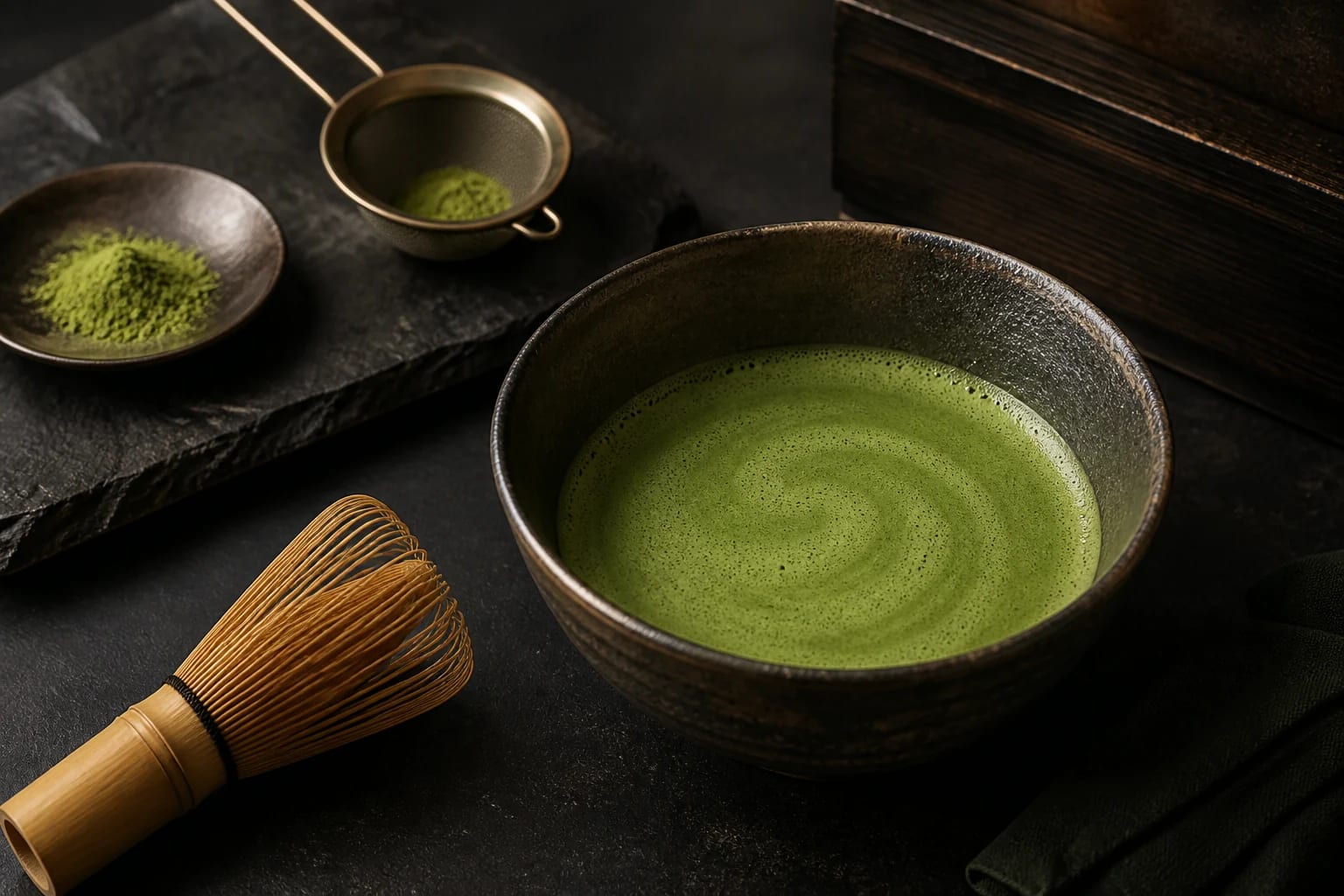
Sift the powder if it has formed aggregates. Mix it first with the small amount of water to create a smooth base, then add the milk. This step avoids directly whisking a dry powder into 200 ml of liquid, a method which often produces floating lumps.
For an iced version, keep the same concentrated base and pour it over the milk and ice cubes. Cold attenuates the aromas: 2.5 to 3 g may be necessary where 2 g is sufficient when hot. Our hojicha latte recipe details a complete at-home method.
Using the powder in baking
In a cream, ganache or cake mix, start around 1-2% of the total weight, then adjust. For 500 g of preparation, this represents 5 to 10 g. Fat carries roasted flavors well, but dark chocolate and coffee can overpower them. White chocolate, vanilla, pear, sesame and nuts offer more readable combinations.
Mix the powder with the dry ingredients or disperse it in a small portion of the warm liquid before incorporating. Adding it at the end of the recipe directly to a cold mass promotes brown spots. Very long or very hot cooking can flatten the finest notes; you must therefore taste the dough and the finished product separately.
Compare the real price in Switzerland
Calculate cost per cup from the current shop price per gram, your actual dose and measured wastage. Revalidate the calculation whenever a format or price changes.
Calculate cost per cup from the current shop price per gram, your actual dose and measured wastage. Revalidate the calculation whenever a format or price changes.
Storage after opening
Close the container immediately, keep it dry, away from light, heat and strong odors. Always use a dry spoon. For a coffee, avoid leaving the bag open on the steam station: heat and humidity are precisely the conditions to limit.
It is not necessary to systematically transfer a good resealable bag. Each manipulation adds air and a risk of contamination. If using a utility box, feed it in small quantities and keep the main stock closed.
Frequently asked questions
Is hojicha powder brown matcha?
No. Matcha comes from shaded and then ground tencha; Hojicha is roasted green tea, then possibly reduced to powder. Their color, construction and flavor profile are different.
Why is my powder not dissolving completely?
Because these are leaf particles, not a soluble extract. Fine grinding, sieving, a base with little water and vigorous stirring improve suspension. A slight deposit after resting remains normal.
Which milk to choose?
Whole milk accentuates roundness; oats provide softness and body; soy offers a more neutral structure but can foam differently. Test without syrup first. The best milk is the one that supports the toasted notes without covering them.
Is organic powder necessarily better?
The certification provides information on the production method, not the roasting precision or the fineness of the grind. Check ingredients, origin, freshness, texture and cup result separately.
In short: choose a pure, traceable, aromatically clean powder, fine enough for your use and packaged according to your consumption speed. To discover the format without overstocking, the 50 g sachet constitutes a reasonable test; for a professional rotation, the 500 g significantly reduces the cost per portion.
Read next
To go further, see Hojicha: The Roasted Japanese Tea Nobody Knows About (Yet), then Hojicha Powder Latte: A Warm, Roasted Alternative to Matcha. For a complementary angle, also read How to Prepare Matcha: Traditional and Modern Methods.