Is Matcha a Miracle Product? (Spoiler: No)
No, matcha is not a miracle product. Sorry to disappoint you.
If you landed here hoping to read that matcha would transform your health, help you lose 10 kilos and fix your sleep all at once, we're going to be upfront: that's not how it works. And anyone telling you otherwise is probably trying to sell you something.
We sell matcha too. The difference is we'd rather tell you the truth and have you come back, than oversell a dream and lose you after three weeks.
Contents
- What matcha is not
- What matcha actually is
- Caffeine: the real story
- L-theanine: the one honest argument
- Catechins and antioxidants: let's get some perspective
- So why drink matcha?
- Matcha marketing, let's talk about it
- Who matcha actually makes sense for
What matcha is not
Matcha is not a fat burner. It doesn't detox anything (your liver and kidneys handle that just fine). It doesn't measurably boost your immune system. It doesn't slow aging. It doesn't replace a proper night's sleep, a balanced diet or physical exercise.
All of these claims exist online. They're based on either preliminary studies taken out of context, pure marketing, or a confusion between correlation and causation. The fact that Japanese people live long and drink green tea doesn't prove that green tea makes you live longer. They also eat differently, have a different healthcare system and generally different lifestyle habits.
What matcha actually is
Matcha is powdered green tea. Shade-grown Camellia sinensis leaves, harvested, dried and ground into fine powder. When you drink matcha, you consume the whole leaf, which gives you more compounds than a regular infusion where you discard the leaves. That's a fact, not a miracle.
Practically speaking, a cup of matcha gives you:
- Caffeine (around 60-70 mg per cup, roughly equivalent to an espresso)
- L-theanine (an amino acid found primarily in tea)
- Catechins (polyphenols present in all green tea)
- A distinctive taste somewhere between umami and bitterness, depending on quality
That's it. No secret ingredient. No revolutionary molecule that science hasn't found yet.
Caffeine: the real story
Let's be direct: a large part of what people attribute to matcha (energy, focus, mental clarity) simply comes from caffeine. The same caffeine found in coffee, black tea or even some fizzy drinks. Matcha didn't invent caffeine.
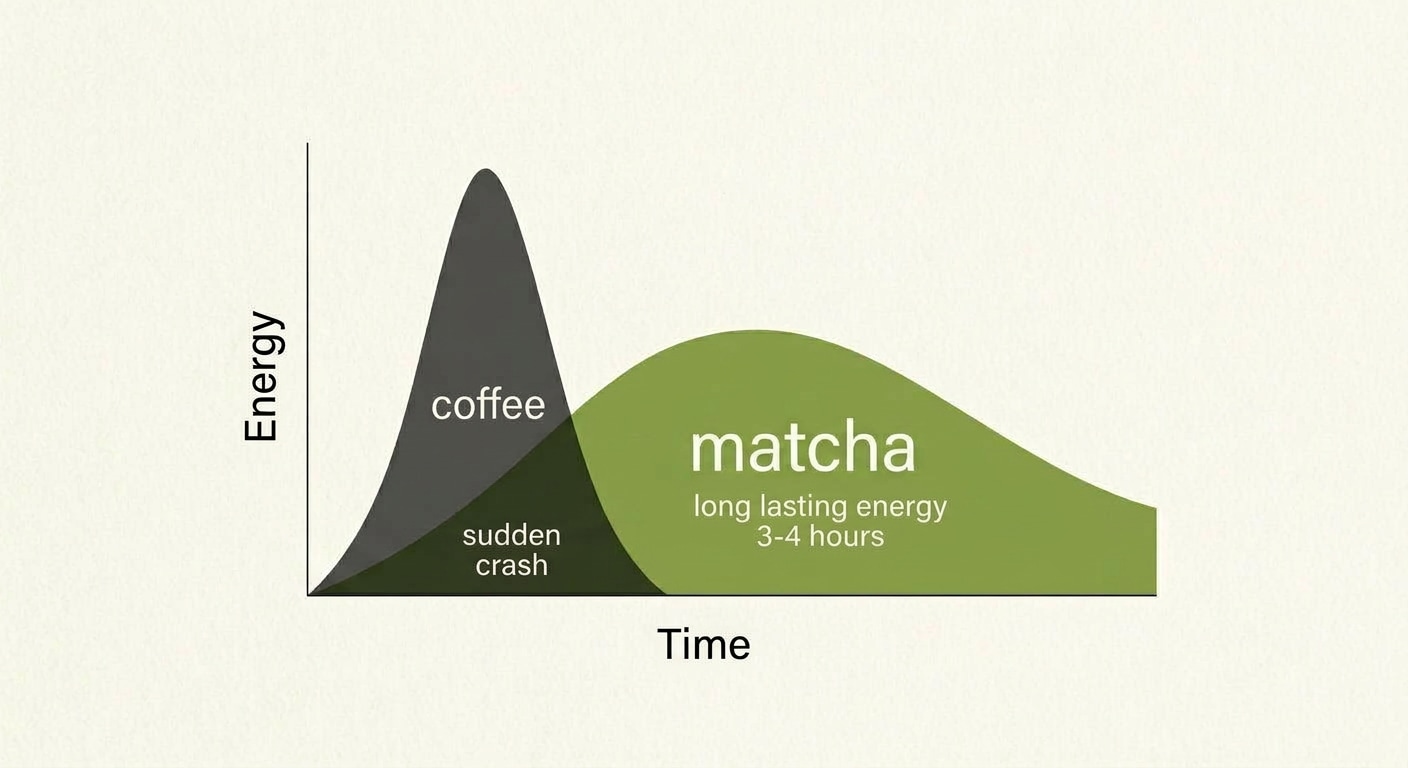
The difference is the context in which that caffeine arrives. With coffee, it's often a quick spike followed by a crash. With matcha, the combination of L-theanine and caffeine, as well as the drinking context, may change the perceived effect; evidence does not establish that its caffeine is absorbed more slowly. Some people feel a more gradual effect. Others notice no difference at all. It's very individual.
If you're just looking for caffeine, coffee does the job. If you want an alternative with a slightly different profile, matcha can be interesting. Not miraculous. Interesting.
L-theanine: the one honest argument
L-theanine is probably the most honest argument in favour of matcha. It's an amino acid that is naturally present in tea; perceived effects alongside caffeine vary between individuals without the jittery peaks that coffee can cause in some people.
This is real. It's measurable. But it's also subtle. We're not talking about a drug. We're talking about a drink that can make your work afternoon slightly more pleasant. If that's enough of a reason for you, great. If you expect more, you'll be disappointed.
Catechins and antioxidants: let's get some perspective
Yes, matcha contains catechins, notably EGCG. Yes, these are antioxidants. No, that doesn't mean drinking matcha "fights aging" or "prevents cancer".
Studies on catechins are interesting in the lab. In vitro, on isolated cells, at concentrations you never reach by drinking tea. Extrapolating those results to your morning cup is like saying an umbrella protects against meteorites because it protects against rain. The mechanism doesn't scale that way.
Are catechins bad for you? No. Will they revolutionise your health? Also no.
So why drink matcha?
Because it tastes good. Because it can replace a coffee if you feel like it. Because the preparation ritual can be enjoyable. Because it's a caffeine alternative with a slightly different profile thanks to L-theanine. Because you like the taste.
These are perfectly valid reasons. They don't need any exaggerated health claims to stand on their own.
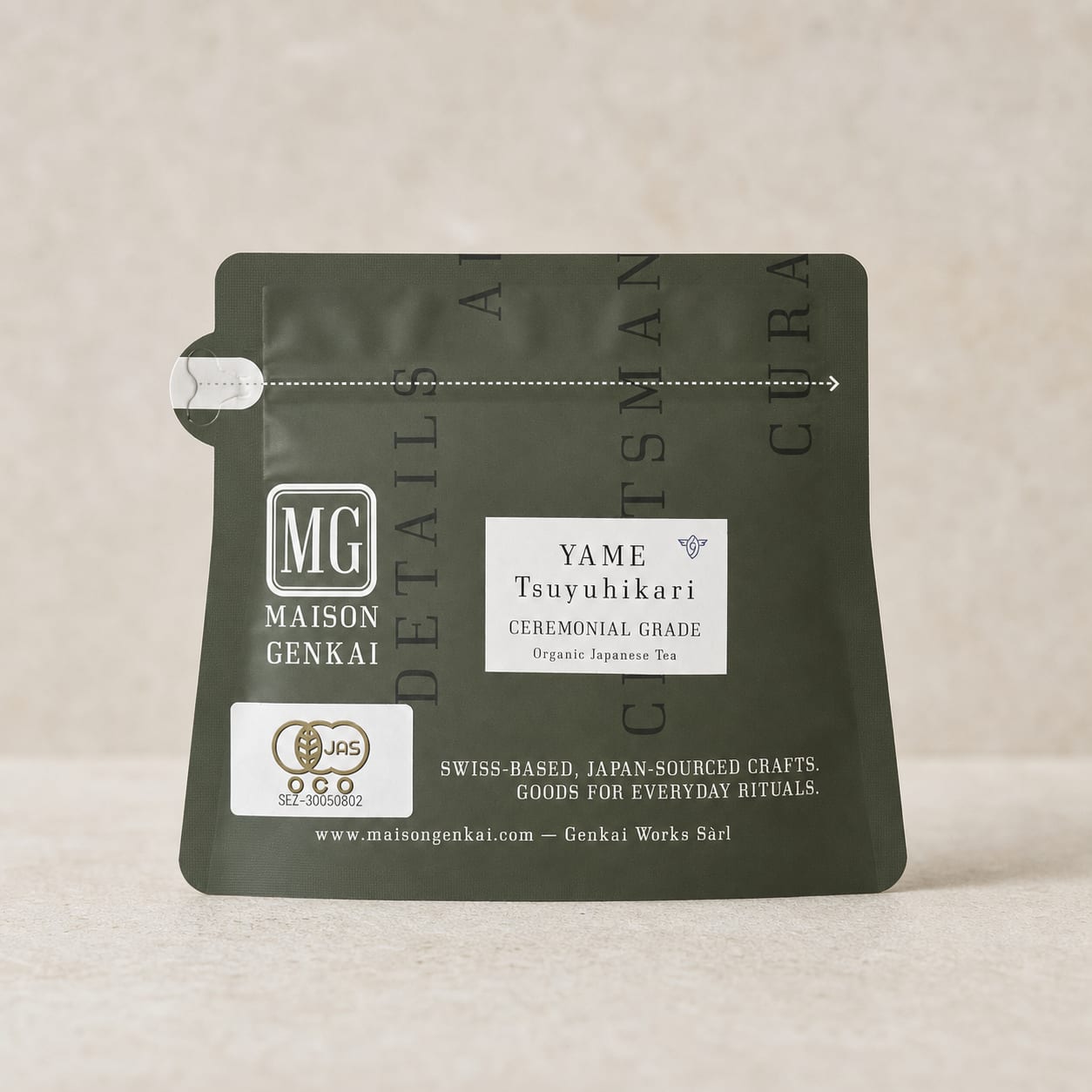
Maison Genkai sources its premium matcha and hojicha exclusively from Yame, Fukuoka. Current formats, prices and availability are listed in the shop.
Matcha marketing, let's talk about it
Matcha became a trendy product, and like any trendy product, marketing took over. "Superfood", "detox", "fat burner": these words have no precise legal or scientific definition. They're sales terms.
When a brand tells you their matcha will "boost your metabolism", ask yourself: by how much? Studies showing catechin effects on metabolism report differences so marginal they disappear in the statistical noise of everyday life. Taking the stairs instead of the lift probably has more impact.
We sell matcha because it's good tea. Full stop. We don't sell health promises because we can't keep them, and we'd rather be clear about that.
Who matcha actually makes sense for
Matcha is a good choice if you:
- Like green tea and want a more concentrated version
- Are looking for a coffee alternative with a slightly different caffeine profile
- Enjoy the preparation ritual (whisk, bowl, the gesture)
- Want to cut down on sugary drinks by switching to something more sober
- Simply like the taste
Matcha doesn't make sense if you're looking for a health shortcut. There is no health shortcut. There are habits built over time, and matcha can be part of those habits without pretending to be the centre of them.
Frequently asked questions
Is matcha healthier than coffee?
Not fundamentally. Both deliver caffeine. Matcha also provides L-theanine, which may suit some people. But "healthier" depends entirely on your body and preferences.
Should I drink matcha every day?
If you enjoy it and caffeine doesn't bother you, sure. If you don't like it, don't force yourself because an article on the internet said it was good for you.
Is organic matcha better?
The organic label guarantees certain farming practices. It doesn't guarantee better taste or nutritional content. Choose based on what matters to you.
Which matcha to start with?
A versatile premium matcha from Yame you can drink pure or as a latte. No need to start with the most expensive. Start with the one you'll actually drink.
Conclusion
Matcha is not a miracle product. It's powdered green tea with caffeine, L-theanine and a distinctive taste. It won't change your life, it won't make you lose weight and it won't replace a healthy lifestyle. But it's a pleasant drink, a potentially satisfying ritual and an honest alternative to coffee. If that speaks to you, explore our teas. If not, no hard feelings.
Scientific sources
- Review of matcha composition and the available evidence
- EFSA opinion on the safety of green tea catechins
- Systematic review of theanine, caffeine, cognition and mood
Read next
For cafés, restaurants and retailers
Japanese tea for your business
Serving matcha or hojicha, or stocking it in your shop? Tell us how you plan to use it and your expected volumes. We can discuss samples, pack sizes and a quote for your business.
Yame matcha delivered in Switzerland
Find a matcha for your daily ritual
For a morning latte or a bowl of tea, explore our matcha from Yame. Each product page shows the pack size, price and current availability.
Shop matcha