Ube vs matcha: which latte suits your taste?
Choose matcha if you want the vegetal flavour of tea in your latte; try ube if you prefer a milder flavour and a caffeine-free base. Matcha is powdered green tea. Ube is purple yam and is naturally caffeine-free. You can combine them, but they are not a gram-for-gram swap.
Which should you choose?
- You want to taste tea through the milk: start with matcha.
- You want to avoid caffeine: choose pure ube without matcha or coffee, and check the other ingredients.
- You prefer a milder drink: try ube without syrup before deciding whether to sweeten it.
- You want both flavours: an ube matcha latte combines them, but contains caffeine.
This guide is for home latte drinkers and cafés deciding what to serve. For ube, we introduce our commercial partner UBÉRA. Maison Genkai supplies Japanese tea. Ube is purchased separately from our partner.
Ube vs matcha: the main differences
| What you are comparing | Matcha | Ube |
|---|---|---|
| Base ingredient | Green tea leaves ground into powder | Purple yam, Dioscorea alata |
| Flavour | Vegetal and umami, with varying intensity | A milder profile; specific notes depend on the product |
| Caffeine | Present in the tea | Absent from pure ube; check blended products |
| Colour | Green | Purple |
| What to check before buying | Origin, ingredients, intended use and freshness | Actual ube content, sugar, flavourings and preparation instructions |
| On a drinks menu | For a latte that retains the flavour of tea | For a drink without tea or coffee, provided the other ingredients are suitable |
A purple powder is not automatically ube. Read the name and ingredient list: ube, taro and purple sweet potato are not interchangeable names. UBÉRA lists its ube powder as 100% purple yam, with no added sugar.
Which flavour works for your latte?
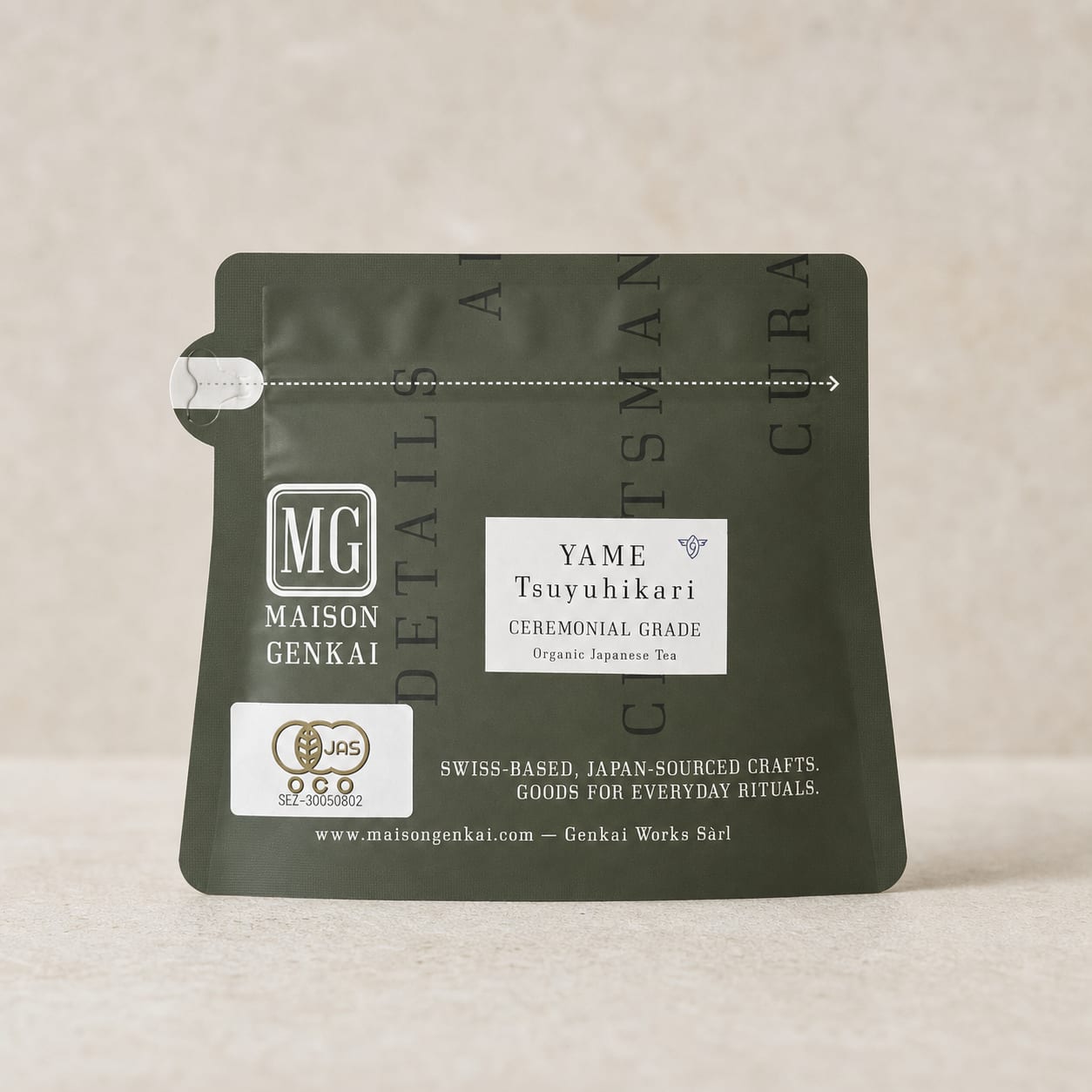
If you want to taste tea through the milk, start with matcha. Maison Genkai’s matchas come from Yame in Fukuoka prefecture. Our origin and quality guide explains their intended uses. A grade name is a starting point, not a substitute for trying a tea in your own recipe.
Try ube without syrup first. UBÉRA describes its powder as having vanilla and nutty notes. These are tasting descriptions, not an ingredient list: read the label to establish what has actually been added.
Compare them at home or in your café
This is a method for testing your own ingredients, not a report of a tasting we have carried out.
- Record each powder’s product name and ingredients. Follow its preparation instructions rather than using the same weight of both powders.
- Keep the milk, finished volume and amount of ice the same. Start without syrup.
- Stir and taste each drink, then taste again after a few minutes. Note the tea flavour, perceived sweetness, texture and any sediment.
- For café service, have another team member repeat the recipe. Record the quantities and preparation time before adding it to the menu.
Caffeine and sugar: check the whole drink
A pure ube latte without added tea or coffee can suit someone looking for a caffeine-free drink. An ube matcha latte contains caffeine because it contains matcha. Neither milk nor ube removes the caffeine in tea. Make that distinction clear on your menu.
We do not give one caffeine figure for every matcha: the tea and the amount used both matter. A level teaspoon and a heaped teaspoon are not consistent measurements. Weigh the powder when you develop your recipe.
A packet labelled “no added sugar” does not make the finished latte sugar-free. Milk, plant-based drinks and syrups change its composition. Check their labels and the quantities you serve. Green or purple does not tell you which drink is healthier; this guide is about ingredients and preparation, not medical benefits.
Prepare each powder before adding milk
Matcha
Our starting point for a latte is 2 g of matcha whisked with 30–60 ml of water at 70–80°C, followed by milk. Sift the powder first, then whisk. Adjust the amount of milk to your cup size and preferred intensity. You can also find these preparation guidelines on our wholesale matcha page.
If the drink tastes too strong, start by reducing the powder or adding a little more milk. If it tastes too mild, do the opposite, changing one variable at a time. Our iced matcha latte recipe covers building a cold drink around the tea.
Ube
Follow the instructions for the specific powder you buy. A flour that needs cooking and a powder intended for lattes may require different methods. UBÉRA specifies a 5 g serving of its product and advises mixing it with a little hot liquid first. Do not assume the same dose works for another brand.
Making an ube matcha latte
Mix the ube and matcha separately before adding the milk. That lets you adjust each component before putting the drink together. Pour slowly if you want visible layers, then stir before judging the final flavour. Distinct layers are a presentation choice, not a measure of quality.
UBÉRA publishes the quantities and method for its ube matcha latte recipe. Use that as a starting point and keep a note of your adjustments. For someone requesting a caffeine-free drink, offer ube without matcha rather than a smaller serving of tea.
For cafés: which latte belongs on your menu?
Start with matcha if you want to develop your tea drinks. Try ube on its own if you want an option without tea or coffee. Combining them means preparing two bases; measure the time this takes during your own service before settling on a recipe.
Compare cost per serving, not just price per kilogram
Powder cost per drink = packet price ÷ packet weight in grams × grams used. Use your purchase prices on the same basis, either excluding or including VAT, when comparing ingredients.
Illustration using hypothetical prices. The amounts below are not Maison Genkai or UBÉRA prices, and are not a commercial offer. The doses are assumptions for the calculation; adjust them to your products’ instructions and your recipe.
| Costing assumption | Matcha | Ube |
|---|---|---|
| Hypothetical price per 100 g | CHF 30.00 | CHF 12.00 |
| Assumed dose per drink | 2 g | 5 g |
| Powder cost per drink | CHF 0.60 | CHF 0.60 |
| Powder for 100 drinks, without waste | 200 g | 500 g |
In this example, the servings cost the same despite different prices per kilogram. Add milk, other ingredients, waste and packaging. Labour and overheads still need to be covered: powder cost is neither the full cost of a latte nor your profit margin. Our matcha latte dosage and costing guide explains yield and waste in more detail.
Before the first service
Keep a recipe card with the product, dose, milk, any sweetener and finished volume. Check allergens and storage instructions for every ingredient. Distinguish “ube latte” from “ube matcha latte” on the menu so the blend is not presented as caffeine-free.
Discuss your recipe and matcha requirements: tell us which drinks you plan to serve, your glass size, milk and estimated number of portions. We can discuss suitable teas and wholesale terms for your business.
Where to buy matcha and ube in Switzerland
For home use, our guide to choosing matcha for a latte helps you compare flavour profiles. Then browse the matchas available from Maison Genkai and check pack size, price and stock on the product page.
For ube, visit our commercial partner UBÉRA for pack sizes and preparation instructions. Each shop handles its own orders, shipping charges and terms of sale. This guide does not offer a combined checkout.
Frequently asked questions
Is ube a type of purple matcha?
No. Ube is purple yam; matcha is powdered green tea. Their colours and shared use in lattes do not make them the same ingredient.
Is an ube matcha latte caffeine-free?
No. The matcha adds caffeine. For a caffeine-free version, leave out the tea and check the other ingredients.
Do I need ceremonial matcha for a latte?
Not necessarily. Choose according to how the tea tastes with your milk and serving size. Compare products in the finished drink rather than relying on the grade name alone.
Can I replace matcha with the same amount of ube?
Do not assume they can be swapped gram for gram. Follow the supplier’s instructions and adjust for the flavour you want. Test the new recipe before serving it.
Which drink should a café offer?
Matcha fits a tea-based drinks menu. Ube can add an option for customers who want to avoid tea and coffee. If you combine them, make the presence of matcha and caffeine clear.
Sources and product information
This comparison draws on UBÉRA’s published ingredients, its ube and matcha guide, and Maison Genkai’s origin and preparation information linked above. The comparison and service suggestions are our practical recommendations, to be adapted to your ingredients.
For cafés, restaurants and retailers
Japanese tea for your business
Serving matcha or hojicha, or stocking it in your shop? Tell us how you plan to use it and your expected volumes. We can discuss samples, pack sizes and a quote for your business.
Yame matcha delivered in Switzerland
Find a matcha for your daily ritual
For a morning latte or a bowl of tea, explore our matcha from Yame. Each product page shows the pack size, price and current availability.
Shop matcha