Yabukita vs Tsuyuhikari: Which Matcha Cultivar to Choose?
Yabukita and Tsuyuhikari are not grades of matcha, but cultivars of the tea plant: selected varieties of Camellia sinensis. The cultivar influences the agronomic and sensory potential, but it is never enough to predict the cup on its own. The terroir, shading, harvest date, tencha sorting, grinding and batch are just as important.
Maison Genkai offers two organic monocultivar matchas from Yame, one Yabukita and the other Tsuyuhikari. This comparison answers a practical question: which one to choose to drink neat or in latte? It is based on agronomic research and descriptions of marketed packaging, carefully separating the characteristics of the cultivar and the actual profile of the batch.
What is a cultivar?
A cultivar is a cultivated variety selected for particular characteristics: budding period, yield, resistance, color, composition or processing quality. Two Yabukita plantations do not necessarily produce the same tea. The plant material is comparable, but the environment and know-how transform its expression.
The word “monocultivar” means that the product highlights a single variety. A blend combines several cultivars or batches to seek a balance, a signature or consistency. A monocultivar is not automatically superior; above all, it offers more precise information and a more direct comparison.
Yabukita: the great landmark of Japanese tea
Yabukita has long dominated Japanese plantations thanks to its combination of quality, yield and adaptation. This spread makes it an excellent reference point. Many fans recognize in its teas a clear vegetal structure, a balance between umami and astringency and a familiar expression of Japanese green tea.
However, it would be wrong to conclude that all Yabukita is identical. An unshaded sencha, a gyokuro and a matcha from this cultivar undergo different cultures and transformations. Even between two matchas, the duration of shading, harvesting and grinding profoundly shifts the balance.
The bag of Organic Yabukita from Yame 40 g describes deep umami, vegetal notes, soft texture, creamy foam and slight bitterness. These are the benchmarks of the product sold by Maison Genkai, not a universal definition of the cultivar.
Tsuyuhikari: a more recent and less widespread variety
Tsuyuhikari is a newer Japanese variety. Japanese agronomic works compare it directly to Yabukita. A summary of the tea research center describes in particular faster leaf growth, slower hardening of certain leaves and more progressive maintenance of total nitrogen during development, under the conditions studied.
A publication dedicated to effects of shading on Tsuyuhikari also remembers that the covering modifies the characteristics of the tea. These results concern tests and do not allow us to announce an identical taste for all Tsuyuhikari matcha. They explain why the cultivar is of interest to growers looking for color and quality under different protocols.
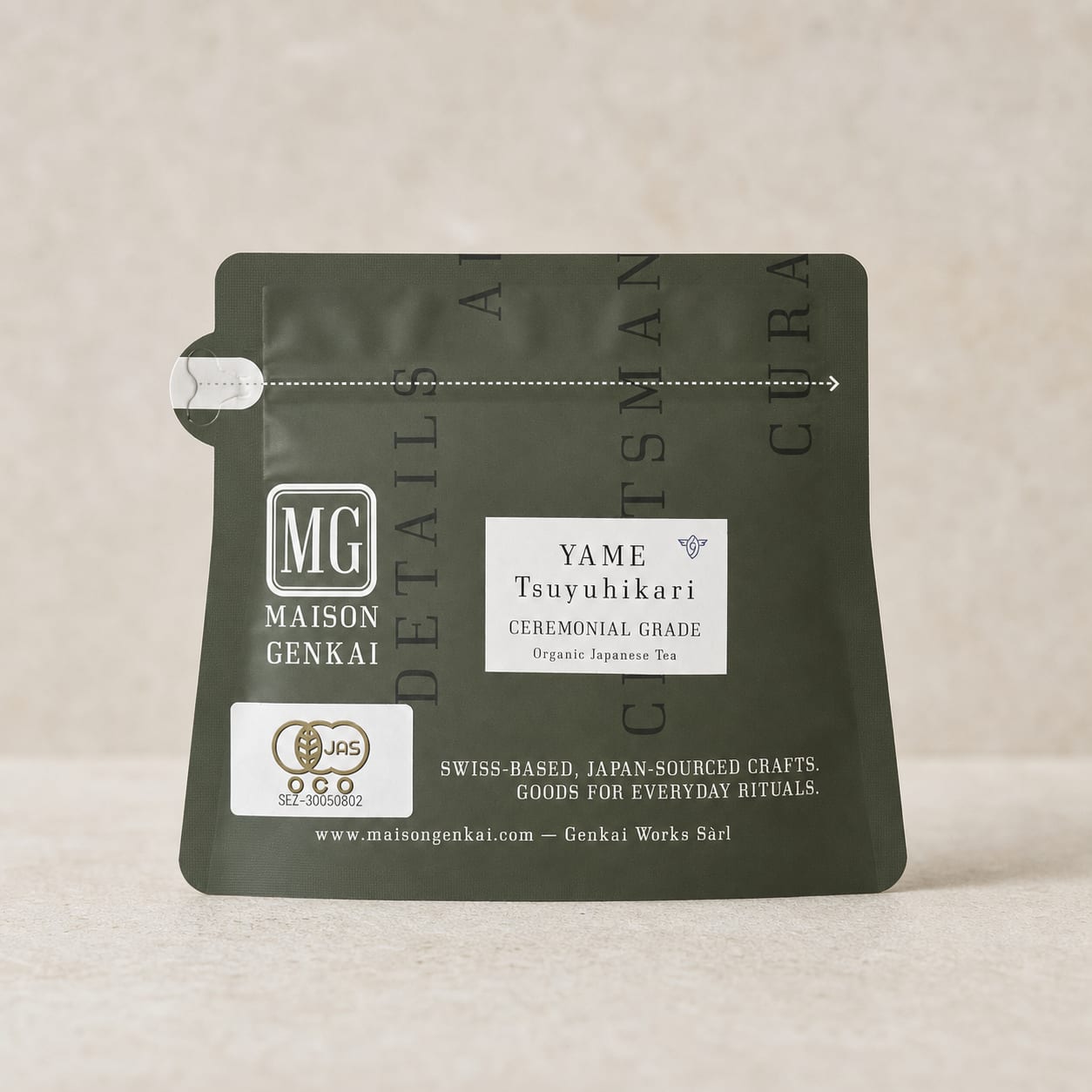
The bag of Organic Tsuyuhikari from Yame 40 g describes floral and vegetal notes, a velvety texture, creamy foam and gentle bitterness. In this specific range, it is therefore the most aromatic and supple option on paper.
Quick comparison of the two Maison Genkai matchas
| Criteria | Yabukita | Tsuyuhikari |
|---|---|---|
| Origin of the batch | Yame, Fukuoka | Yame, Fukuoka |
| Visible certification | Organic JAS | Organic JAS |
| Format | 40g | 40g |
| Declared shading | 4 weeks | 4 weeks |
| Bag profile | Deep umami, vegetal, sweet, slight bitterness | Floral and vegetal, velvety, sweet bitterness |
| Price | Depends on the lot and current offer |
The table only compares current references. It does not transform a difference of at the current listed price into an absolute judgment on the cultivars. The price reflects a product and a batch, with their volumes, costs and positioning.
Which cultivar to choose for drinking pure?
Prepare each tea with the same water, the same temperature and the same dosage. For a comparative usucha: 2 g of matcha, 60 to 70 ml of water around 75°C and the same whisking. Enjoy without sugar or milk. Note the dry aroma, the nose after adding water, the attack, the umami, the bitterness, the texture and the length.
Choose Yabukita if you are looking for a deep, vegetal and structured cup in this range. Choose Tsuyuhikari if you prefer floral notes, a velvety texture and a bitterness described as softer. For a first purchase, there is no bad choice: sensory preference is more important than the rarity of the name.
What about a matcha latte?
Milk reduces the perception of fine differences and brings its own sweetness. Start with 2g of powder for 180-220ml of final drink. A neutral milk makes it easier to compare; a vanilla or fruity syrup can dominate both cultivars.
Yabukita can offer a more classic plant-based presence in milk. Tsuyuhikari can bring a more floral topping, especially in a recipe that is not very sweet. But if the latte is very large or very flavored, a premium matcha intended for this purpose will often be more rational than these two small batch monocultivars.
Our guide which matcha to choose for a latte precisely addresses the relationship between intensity, milk, sugar and budget. The cultivar is a parameter; usage remains the first decision.
What the cultivar does not guarantee
It does not guarantee the grade
Yabukita and Tsuyuhikari can be used for several styles of tea. The botanical name proves neither first harvest, nor slow grinding, nor ceremonial selection. This information must be verified separately.
It does not guarantee a color
The cultivar influences the potential, but shading, nutrition, harvesting, steaming, drying, grinding and storage shape the final color. A highly saturated photo is not a measure of quality.
It does not guarantee a fixed profile
“Floral” or “vegetal” describes a trend or a batch. Weather, plot and processing can shift the cup. A serious comparison attributes the descriptors to the product tasted or to the packaging, without generalising them to the entire cultivar.
It does not replace freshness
A reputable matcha, improperly sealed for months, will lose more than a more common cultivar consumed fresh. Read our guide to storage of matcha after opening and choose a format compatible with your rotation.
Organize a comparative tasting at home
- Use two similar bowls and label them under the base.
- Sift 2 g of each powder.
- Use the same water and control the temperature.
- Add exactly the same volume.
- Whisk for the same duration.
- Smell then taste alternately, without trying to guess the cultivar.
- Repeat another day; a single tasting can be influenced by the meal or the order.
A blind comparison is useful because a rare name or higher price creates expectations. First notice what you perceive, then discover the label. The result does not need to indicate a “winner”: one tea may be suitable for morning use and the other for slow sipping.
Frequently asked questions
Is Tsuyuhikari better than Yabukita?
No in general. It is less common and may offer a different profile, but the quality depends on the complete product. In the Maison Genkai range, Tsuyuhikari is described as floral and velvety; Yabukita like deep and vegetal.
Why is Yabukita so common?
Its diffusion is due to a historic combination of agronomic quality, yield and adaptation. A common variety is not a mediocre variety: on the contrary, its massive presence makes it a structuring reference in Japanese tea.
Can we mix the two?
Yes, nothing prohibits it. Start by tasting them separately, then try a 50/50 combination. You lose the monocultivar reading, but can create a balance that pleases you. Mix only the amount needed to preserve freshness.
Do these two matchas come from different regions?
No. The two Maison Genkai references come from Yame, Fukuoka. The comparison therefore concerns two cultivars within the same sourcing area and does not repeat the general guide on Japanese tea regions.
In short: Yabukita is the plant and structured landmark; Tsuyuhikari, the more floral and velvety alternative in the lots offered. The cultivar guides the choice, but the right decision comes from controlled tasting, good use and rigorous conservation.
Read next
To go further, see How to Choose Matcha: 2026 Buying Guide, then Best Matcha in Switzerland: Why It's So Hard to Find (2026). For a complementary angle, also read What Is Ceremonial Matcha? Complete Guide.
For cafés, restaurants and retailers
Looking for a Swiss matcha supplier?
Maison Genkai supplies Japanese matcha from Yame to professionals in Switzerland, with samples, volume pricing, and formats for service or resale.