How to Make a Creamy Matcha Latte at Home
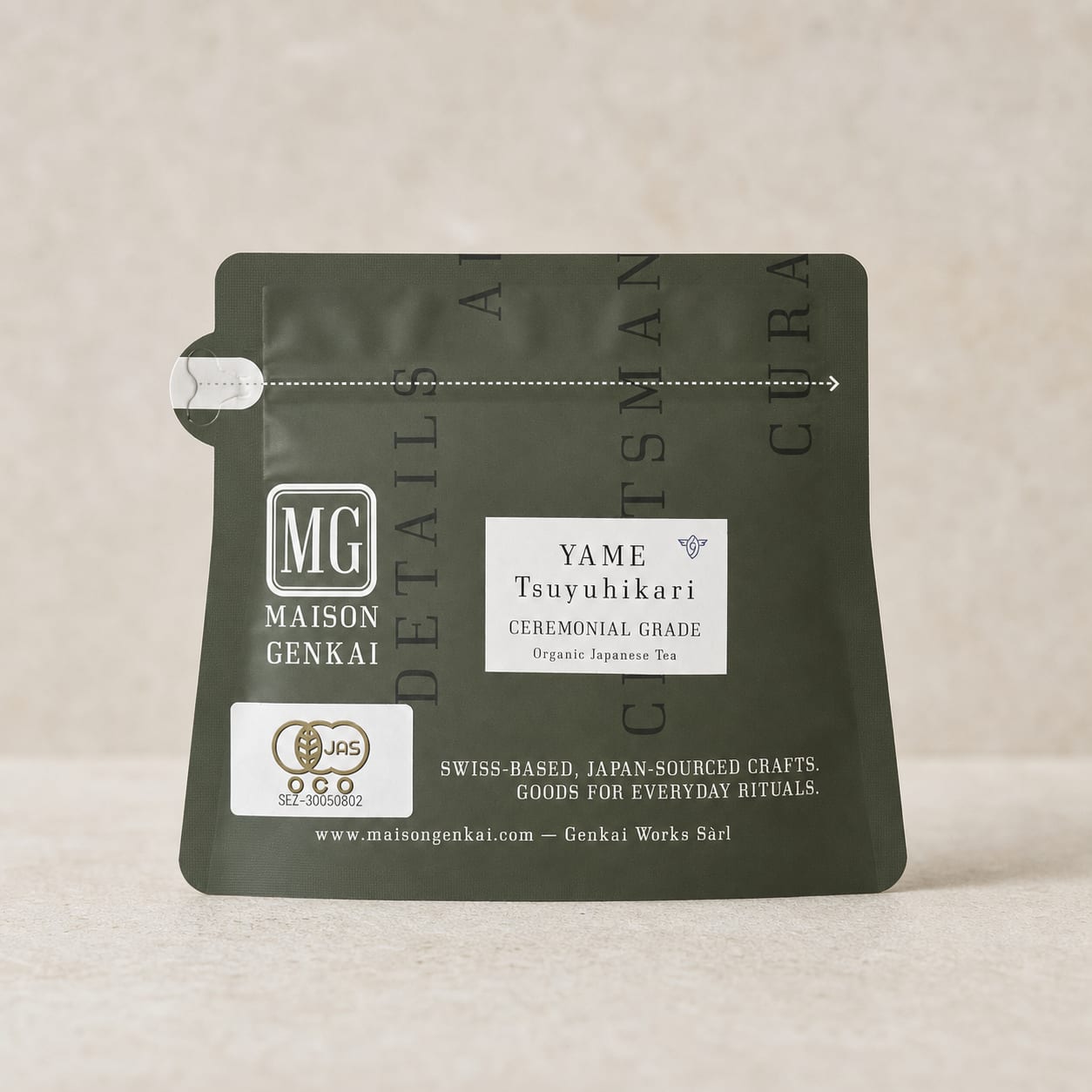
A creamy matcha latte requires neither heavy syrup nor professional coffee equipment. It relies on a short, smooth base, precisely heated milk and a ratio that keeps the tea visible. For this recipe, we use Maison Genkai: grown in Yame, Fukuoka, it is designed for everyday use and lattes. Its gentle, light profile remains present once blended with milk.
The useful rule to remember is simple: prepare a matcha concentrate first, then add the milk. Pouring powder directly into a large cup of milk is the surest way to end up with lumps and a bland drink.
The reference recipe: a hot, creamy matcha latte
This quantity makes one 200–240 ml cup. It works equally well with whole milk or unsweetened barista oat milk.
- 2 g Maison Genkai organic Yabukita matcha (about 1 level teaspoon)
- 45 ml water at 60–70 °C
- 160–180 ml milk
- Optional: 1 teaspoon maple syrup, mild honey or simple syrup
The starting ratio is deliberately concentrated: about 2 g of matcha for 170 ml of milk. If you use a large cup or a 300 ml glass, increase the matcha to 2.5 g rather than simply adding more milk. This will preserve the tea’s vegetal character and umami.
Why sifting really changes the texture
Matcha is very fine, but it compacts during transport and storage. Once wet, these small clumps are difficult to break up and can be felt in the mouth. Sift the 2 g of powder through a small sieve directly over a bowl or wide cup. Ten seconds is enough.
Sifting does not make a matcha better; it simply allows the powder to disperse evenly. That is what produces a smooth concentrate before the first whisking motion. If you are new to matcha, our water-based preparation guide also explains the role of the bowl and whisk.
Making a lump-free matcha concentrate
- Sift the matcha into a sufficiently wide bowl.
- Add about 15 ml of water at 60–70 °C and mix to form a smooth paste.
- Add the remaining 30 ml of water.
- Whisk for 15–20 seconds in quick M or W movements with a chasen, or use a clean electric frother.
The first small amount of water matters: it hydrates the powder gradually. The concentrate should be glossy, uniform and fluid enough to pour. Do not aim for a thick foam at this stage; a fine foam is enough. The frother is there to homogenise the mixture, not to compensate for water that is too hot or a dose that is too small.
What temperature should you use?
For matcha, aim for 60–70 °C. Boiling water accentuates the harsher notes and can make the latte bitter, especially if it is lightly sweetened. Without a thermometer, simply let boiled water rest for a few minutes in a cup, or pour it from one cup to another before using it.
For the milk, the right range is 60–65 °C: hot, with light steam, but never boiling. Overheated milk loses its freshness and feels heavier. With a thermometer, stop before 65 °C; without one, turn off the heat as soon as the saucepan feels hot to the touch and a light veil of steam appears.
Choosing the milk and creating a fine foam
Whole milk gives the roundest texture. For a plant-based alternative, unsweetened barista oat milk is generally the easiest to froth, and its gentle profile works well with matcha. Soy milk can produce a more structured foam, but it is best to let the concentrate settle for a few seconds before combining the two. Highly flavoured milks—coconut, hazelnut or very sweet vanilla—tend to overpower the tea.
Heat the milk, then incorporate only a little air: the foam should be fine, glossy and integrated into the milk, not a layer of dry froth. With a steam wand or electric frother, keep the tip just below the surface for a few seconds, then submerge it to smooth the texture. Once the milk is ready, pour it gently over the matcha concentrate; finish with a spoonful of foam if you want a cleaner finish.
Step-by-step recipe: the hot version
- Sift 2 g of matcha into a bowl.
- Prepare a smooth concentrate with 45 ml of water at 60–70 °C.
- Heat and lightly froth 160–180 ml of milk to 60–65 °C.
- Taste the concentrate if you want to assess the tea; add sweetener at this point, rather than automatically.
- Pour the milk into the bowl, stir once with a spoon and serve immediately.
Maison Genkai sources its premium matcha and hojicha exclusively from Yame, Fukuoka. Current formats, prices and availability are listed in the shop.
A quick 2-minute version
When time is short, keep the same ratio but simplify the process. Sift 2 g of Premium Matcha into a wide cup, add 45 ml of water at 60–70 °C, then use an electric frother for 10–15 seconds. Heat 170 ml of milk in the microwave or a small saucepan until hot, without letting it boil. Pour it into the cup and stir.
This quick version works because it keeps the two decisive steps—sifting and making a concentrate—even without a chasen. Avoid shaking hot water in a sealed jar: the pressure and splashes are not worth the few seconds saved.
Adjusting the recipe to your taste
If your latte is too weak, increase the matcha to 2.5 g before adding more sugar. If it is too intense, keep 2 g and increase the milk by 20 ml. If it is bitter, check the water temperature first, then the time you heated the milk. If it is grainy, the problem almost always comes from sifting or from making the concentrate too quickly.
A little sweetener can highlight the milk’s sweetness, but it should not be necessary to hide the tea. Start without sugar, taste, then adjust. This is also the simplest way to compare several milks using the same powder.
The most common mistakes
- Boiling water: use 60–70 °C for a smoother cup.
- No sieve: lumps do not always disappear when whisked.
- Too much milk: 1 g of matcha in a large cup produces mostly green milk.
- Milk that is too hot: a creamy texture comes from hot milk, not cooked milk.
- Changing everything at once: adjust one variable—dose, temperature or milk—at each attempt.
The right Maison Genkai matcha for a latte
premium matcha from Yame is our direct recommendation for an everyday matcha latte: its gentle profile, grown in Yame in Fukuoka Prefecture, has enough presence to stand up to milk while remaining accessible. Matcha does not need to be the most expensive to make a good latte; it needs to suit the use. See our matcha grades guide to choose between Premium, Ceremonial and High Ceremonial according to your routine.
Frequently asked questions
Do you need a chasen to make a matcha latte?
No. A chasen gives you excellent control, but a clean electric frother produces an excellent result for everyday use. Sifting and making a concentrate matter more than the tool you choose.
Can you make the concentrate with cold water?
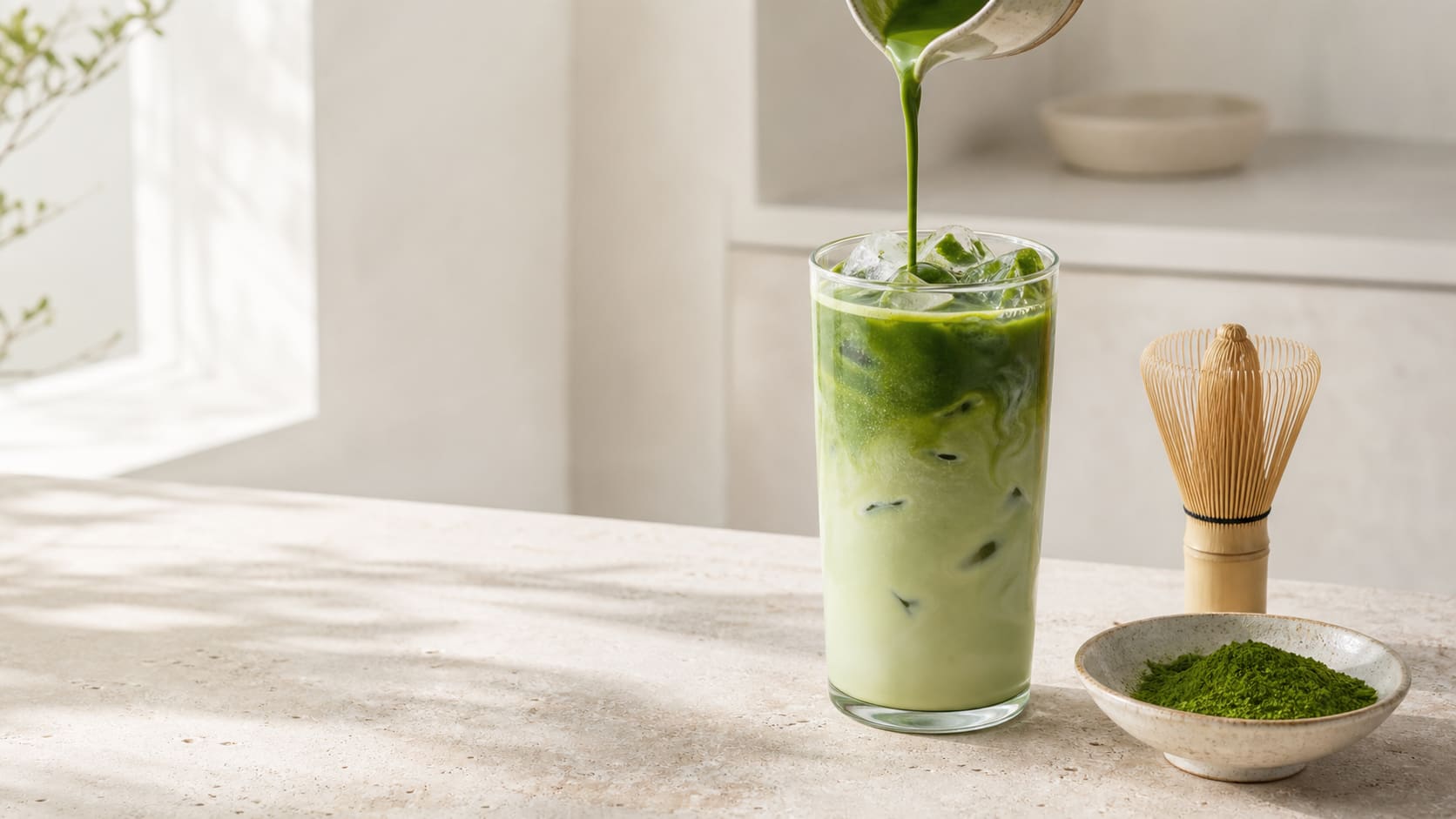
Yes, for an iced drink. Use 30–40 ml of cold water, whisk until the base is smooth, pour it over ice, then add cold milk. For a hot version, water at 60–70 °C remains the simplest reference point.
Why does my matcha latte separate?
A slight deposit is normal with powdered tea. Stir just before drinking. A clear separation more often indicates a concentrate that was not mixed thoroughly enough, milk that was too cold or a ratio that was too diluted.
Read next
For cafés, restaurants and retailers
Japanese tea for your business
Serving matcha or hojicha, or stocking it in your shop? Tell us how you plan to use it and your expected volumes. We can discuss samples, pack sizes and a quote for your business.
Yame matcha delivered in Switzerland
Find a matcha for your daily ritual
For a morning latte or a bowl of tea, explore our matcha from Yame. Each product page shows the pack size, price and current availability.
Shop matcha